All-in-One POS Machine India: Hardware Guide for Grocery Chains 2026
Table of Contents
- Introduction
- The Problem Indian Grocery Chains Face
- The Solution: Choosing the Right POS Hardware
- Essential Hardware Components
- How Commmerce Helps Grocery Chains
- Conclusion
- FAQs
TL;DR
- All-in-one POS machines for Indian grocery chains should include touchscreen terminals, thermal printers, barcode scanners, and offline billing capabilities.
- Essential features include GST compliance, weighing scale integration, UPI payment processing, and multi-store inventory synchronisation.
- Hardware costs range from ₹15,000 for basic setups to ₹85,000 for advanced multi-store systems with full omnichannel capabilities.
- The best POS systems work offline during internet outages and automatically sync data when connectivity is restored.
Introduction
Selecting the right all-in-one POS machine India grocery chains need has become critical for modern retail success in 2026. With the rapid digitisation of Indian retail and increasing customer expectations for fast, accurate billing, grocery store owners must invest in hardware that can handle high-volume transactions while maintaining accuracy across multiple store locations.
An all-in-one POS machine combines billing software, payment processing, inventory tracking, and customer management into a single integrated hardware solution. For grocery chains operating 2 to 50 stores across India, the right POS hardware can dramatically improve operational efficiency, reduce billing errors, and provide real-time visibility into sales and inventory across all locations.
The Problem Indian Grocery Chains Face with All-in-One POS Machine Selection
Indian grocery chains face unique challenges when selecting POS hardware that can handle their complex operational requirements. Most grocery retailers struggle with fragmented systems that cannot communicate across multiple store locations, leading to inventory discrepancies and lost sales opportunities.
Traditional billing solutions like Tally or manual cash registers cannot handle the volume and complexity of modern grocery operations. During peak hours, slow billing systems create long customer queues, leading to abandoned purchases and customer dissatisfaction. Additionally, many POS systems fail during internet outages, bringing store operations to a complete halt.
⚠️Watch OutMany grocery chains make the mistake of choosing POS systems that cannot handle weighing scale integration, leading to manual price calculations for fruits, vegetables, and bulk items.
Inventory management becomes particularly challenging when stores cannot track stock movements in real-time. Without proper hardware integration, grocery chains cannot implement features like automatic reorder points, expiry date tracking, or centralised purchase planning across multiple locations.
According to the India Brand Equity Foundation, the Indian retail sector is expected to reach $2 trillion by 2032, making efficient POS systems essential for grocery chains to capture this growth opportunity.
The Solution: Choosing the Right All-in-One POS Machine Hardware for Indian Grocery Chains
The solution lies in selecting comprehensive POS hardware that integrates seamlessly with omnichannel retail platforms designed specifically for Indian market requirements. Modern all-in-one POS machines should combine robust hardware with intelligent software that works offline and synchronises automatically across all store locations.
Successful grocery chains in 2026 are moving beyond basic billing terminals to complete retail operating systems that unify POS hardware with inventory management, order processing, and customer relationship management. This approach ensures consistent operations whether customers shop in-store, order online, or request home delivery.
Average billing time reduced by 60% with proper POS hardware integrationBased on grocery chain performance metrics across India
The key is selecting hardware that supports GST compliance, multiple payment methods including UPI, and integrates with weighing scales and barcode scanners essential for grocery operations. Additionally, the system must provide real-time analytics and reporting across all store locations from a centralised dashboard.
Essential Hardware Components for All-in-One POS Machine Grocery Store Setup
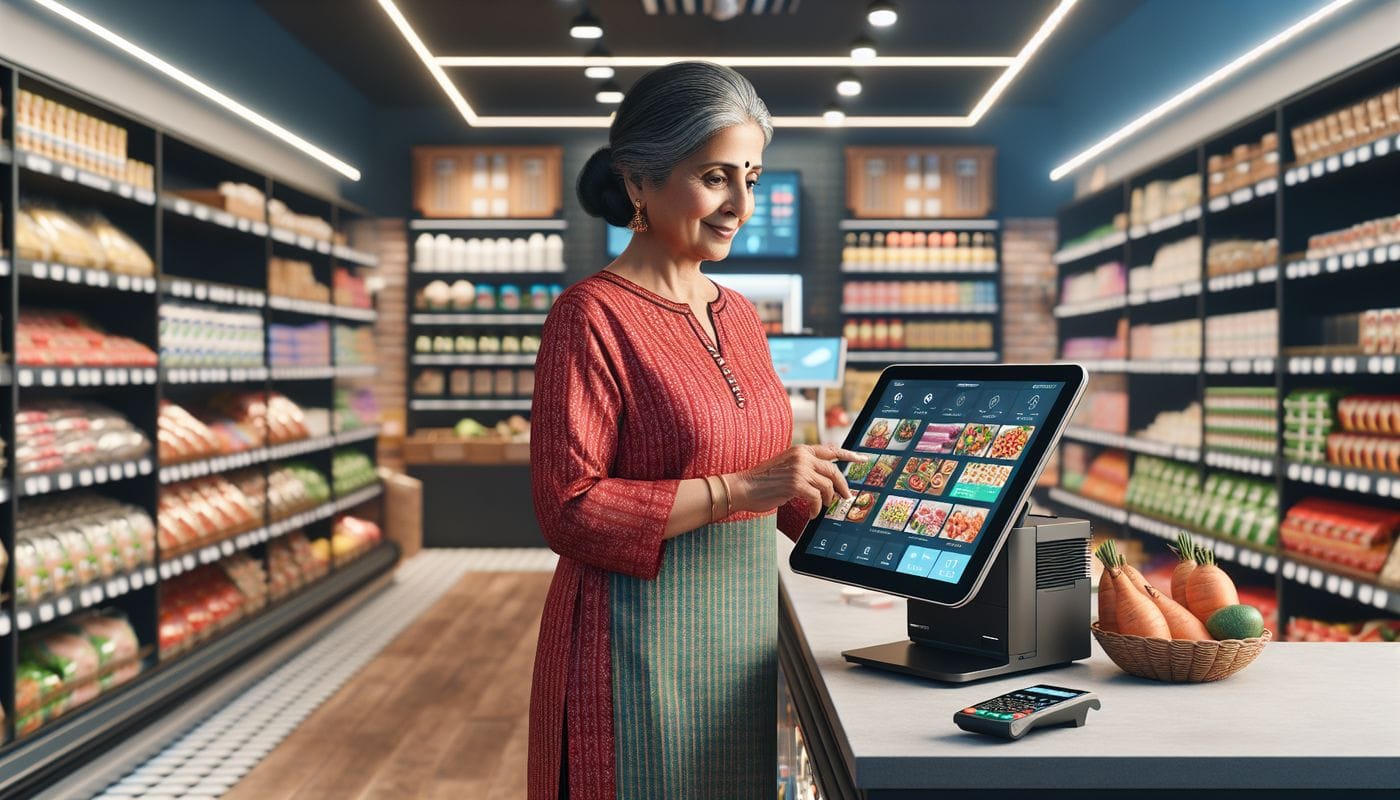
Building an effective all-in-one POS machine setup for grocery stores requires specific hardware components that work together seamlessly. Each component plays a crucial role in ensuring fast, accurate, and reliable billing operations.
Touchscreen POS Terminal
The primary terminal should feature a minimum 15-inch touchscreen display with anti-glare coating for visibility under store lighting. Look for terminals with at least Intel i3 processors and 4GB RAM to handle high transaction volumes without lag. The terminal should support multiple USB ports for peripheral connections and include built-in WiFi and Ethernet connectivity.
Industrial-grade terminals with fanless cooling systems work best in Indian climate conditions, reducing maintenance requirements and ensuring consistent performance during summer months when ambient temperatures are high.
Thermal Receipt Printer
High-speed thermal printers are essential for grocery operations where receipt printing speed directly impacts customer wait times. Choose printers capable of 250mm/second printing speed with automatic paper cutting. The printer should support both 58mm and 80mm paper rolls to accommodate different receipt formats required for various transaction types.
Ensure the printer supports GST-compliant receipt formats and can print QR codes for digital payment verification. Integration with e-invoice generation is mandatory for compliance with Indian tax regulations.
Barcode Scanner and Weighing Scale Integration
Grocery stores require both handheld and fixed barcode scanners capable of reading damaged or poorly printed barcodes common on imported products. 2D scanners that can read QR codes are essential for processing digital payment confirmations and loyalty program integration.
Weighing scale integration is crucial for fresh produce sections. The POS system should support multiple scale brands and automatically calculate prices based on current rates stored in the inventory system. Look for scales with customer-facing displays to ensure pricing transparency.
| Component | Basic Setup | Premium Setup |
|---|---|---|
| POS Terminal | 15" Android Terminal | 21" Windows Terminal |
| Receipt Printer | 80mm Thermal | 80mm + Label Printer |
| Scanner | 1D Handheld | 2D Fixed + Handheld |
| Cash Drawer | 4-Note 5-Coin Tray | 6-Note 8-Coin Tray |
| Total Cost | ₹15,000 - ₹25,000 | ₹50,000 - ₹85,000 |
Payment Processing Integration
Modern grocery customers expect multiple payment options including cash, cards, UPI, and digital wallets. The POS hardware should integrate with payment gateways like Razorpay, PhonePe, and Paytm without requiring separate terminals. Look for systems that support contactless payments and QR code generation for UPI transactions.
Payment processing should be seamlessly integrated with the billing software to automatically reconcile transactions and generate consolidated settlement reports across all payment methods.
Customer Display and Cash Management
Customer-facing displays improve transparency and reduce billing disputes by showing item details, prices, and running totals during checkout. The display should be large enough for easy reading and positioned at an appropriate angle for customer visibility.
Cash drawers must be robust enough for high-frequency use with multiple denomination compartments. Look for drawers with electronic locking mechanisms that integrate with the POS software to prevent unauthorized access and maintain audit trails.
For detailed hardware selection guidance, refer to our Complete Guide to Retail Hardware for Indian Store Owners which covers specific brand recommendations and setup procedures.
💡Pro TipInvest in UPS backup systems for all POS terminals to ensure continuous operations during power outages, which are common in many Indian cities.
How Commmerce Omnichannel Platform Optimises All-in-One POS Machine Performance for Grocery Chains
Commmerce transforms standard POS hardware into a comprehensive omnichannel retail operating system designed specifically for Indian grocery chains. Unlike traditional billing software, Commmerce unifies POS terminals, inventory management, online ordering, and delivery operations into a single platform that works seamlessly across multiple store locations.
The platform's offline-first architecture ensures that POS terminals continue operating even during internet outages, automatically syncing transactions and inventory updates when connectivity is restored. This is crucial for grocery stores where downtime directly impacts revenue and customer satisfaction.
Multi-Store Inventory Synchronisation
Commmerce provides real-time inventory visibility across all store locations and warehouses from a centralised dashboard. When a customer purchases items at any location, inventory levels are automatically updated across the entire chain, preventing stockouts and enabling intelligent reorder management.
The system tracks expiry dates for perishable items and sends automated alerts for products nearing expiration, helping grocery chains minimise waste and maximise profitability. Integration with weighing scales ensures accurate pricing for fresh produce and bulk items.
GST Compliance and Automated E-Invoicing
All POS terminals automatically generate GST-compliant receipts and integrate with GSTN for e-invoice generation. The system handles complex tax calculations for different product categories and maintains detailed audit trails for compliance reporting.
Unlike solutions like Vyapar or Marg ERP that require manual GST filing, Commmerce automates tax calculations and provides ready-to-file reports that integrate directly with TallyPrime for accounting purposes.
Integrated Payment Processing
The platform includes native integrations with major Indian payment gateways including Razorpay, PhonePe, and Paytm. Customers can pay using any method including UPI QR codes, contactless cards, or digital wallets, with all transactions automatically reconciled in the system.
Payment settlements are tracked across all stores with detailed reporting on payment method preferences, helping grocery chains optimise their payment acceptance strategies.
Customer Loyalty and CRM Integration
Built-in customer relationship management tracks purchase history across all store locations, enabling personalised promotions and loyalty programs. Customers can earn and redeem points at any store location, with their complete purchase history accessible to staff for better service.
WhatsApp integration allows stores to send digital receipts, promotional offers, and order confirmations directly to customers, improving engagement and encouraging repeat purchases.
Running a retail business in India?See how Commmerce unifies your stores, inventory, orders and delivery in one platform.Schedule a Free Demo
For grocery chains looking to implement quick commerce capabilities, our Quick Commerce Setup for Indian Grocery Chains guide provides detailed implementation strategies.
Conclusion
Selecting the right all-in-one POS machine India grocery chains need requires careful consideration of hardware specifications, software capabilities, and integration requirements. The most successful grocery chains in 2026 are those that combine robust POS hardware with comprehensive omnichannel platforms that unify in-store, online, and delivery operations.
Key factors include offline functionality, GST compliance, payment gateway integration, and real-time inventory synchronisation across multiple locations. While hardware costs range from ₹15,000 to ₹85,000 per terminal, the operational efficiency and revenue growth potential justify the investment for serious grocery retailers.
The future belongs to grocery chains that can provide seamless customer experiences across all channels while maintaining accurate inventory and efficient operations. Choosing the right POS hardware foundation is the first step toward building a scalable, profitable grocery business in India's rapidly evolving retail landscape.
FAQs
Q: What is an all-in-one POS machine for grocery stores?
A: An all-in-one POS machine is a complete point-of-sale terminal that integrates billing software, payment processing, receipt printing, barcode scanning, and cash management into a single hardware unit designed for grocery store operations.
Q: How much does an all-in-one POS system cost in India?
A: All-in-one POS systems in India typically cost between ₹15,000 to ₹85,000 per terminal depending on features, with basic models starting at ₹15,000 and advanced multi-store systems costing ₹50,000 to ₹85,000.
Q: What hardware components are essential for grocery chain POS?
A: Essential hardware components include a touchscreen terminal, thermal receipt printer, barcode scanner, cash drawer, payment terminal for cards/UPI, weighing scale integration, and backup power supply for uninterrupted operations.
Q: How do I choose the best POS machine for multiple grocery stores?
A: Choose a POS system that offers centralised inventory management, offline functionality, GST compliance, multi-store reporting, cloud synchronisation, and integration with weighing scales and payment gateways like Razorpay or PhonePe.
Q: Can POS machines work without internet in grocery stores?
A: Yes, modern POS machines can work offline and automatically sync data when internet connectivity is restored, ensuring continuous billing operations even during network outages.
Disclaimer: This article is for general informational purposes only and does not constitute legal, financial, or tax advice. GST rules, compliance requirements, and platform features may change over time. Please verify the latest guidelines with a qualified professional or refer to official sources such as the GSTN or CBIC. Market statistics mentioned are based on publicly available estimates and may not reflect current figures. Commmerce product features referenced are accurate at the time of writing and subject to change.