Table of Contents
- Introduction
- Touchscreen Display and User Interface
- Offline Billing Capability
- GST Compliance and E-Invoice Generation
- Payment Integration Support
- Thermal Printer and Receipt Quality
- Barcode Scanner and Inventory Tracking
- Multi-Store Management Capabilities
- Hardware Durability and Warranty
- How Commmerce Covers These Hardware Needs
- Conclusion
- FAQs
Introduction
Finding the best all-in-one POS machine for Indian retail stores in 2026 requires understanding the unique needs of Indian retailers, from GST compliance to offline billing capabilities. The right POS machine can transform your retail operations, reduce billing time, eliminate manual errors, and provide real-time inventory visibility across all your stores.
Indian retailers face specific challenges that global POS solutions often fail to address. Internet connectivity issues, complex GST requirements, diverse payment methods including UPI, and the need for multi-language support make choosing the right hardware critical for success. According to industry estimates, retailers using integrated POS systems see a 25% reduction in billing time and significantly fewer inventory discrepancies.
This comprehensive guide examines the essential features every Indian retailer should consider when selecting an all-in-one POS machine. We'll cover everything from touchscreen quality and offline capabilities to payment integrations and multi-store management, helping you make an informed decision that scales with your business growth.
Touchscreen Display and User Interface
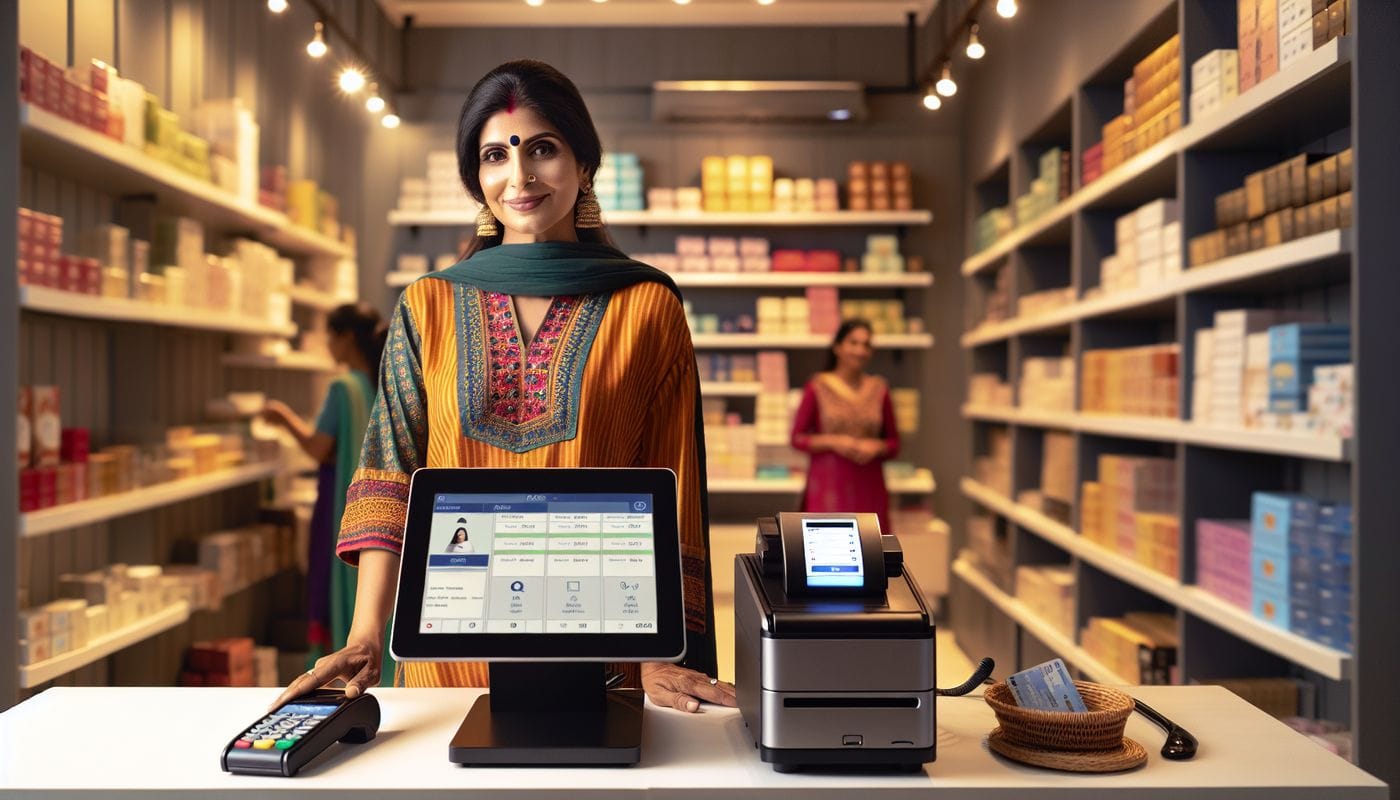
The touchscreen display serves as the primary interface between your staff and the POS system, making screen quality and user interface design crucial factors for efficient operations. A high-quality all-in-one POS machine should feature a minimum 15-inch capacitive touchscreen with multi-touch support and anti-glare coating to ensure visibility under various lighting conditions.
The user interface should be intuitive enough for staff to learn quickly, with large buttons, clear product categories, and easy navigation between functions like billing, inventory lookup, and customer management. Look for systems that support multiple Indian languages, as this reduces training time and minimizes billing errors when staff are more comfortable in regional languages.
Response time is equally important, especially during peak hours when long customer queues can form. The best POS machines feature processors that handle complex calculations, GST computations, and inventory updates without lag. A responsive interface directly impacts customer satisfaction and helps maintain smooth operations during busy periods like festivals or weekend sales.
💡Pro TipTest the touchscreen responsiveness during peak usage scenarios before finalizing your POS machine, as performance can degrade significantly under heavy transaction loads.
Offline Billing Capability
Offline billing capability is non-negotiable for Indian retail stores, given the frequent internet connectivity issues across the country. The best all-in-one POS machines continue operating seamlessly during network outages, storing all transaction data locally and automatically syncing when connectivity returns.
This feature prevents revenue loss during internet downtime and ensures customer satisfaction by maintaining normal billing speeds regardless of network conditions. Your POS system should maintain full functionality including inventory deduction, GST calculations, discount applications, and receipt generation even without internet access.
The synchronization process should be automatic and transparent, updating all connected systems including inventory management, accounting software, and online stores once connectivity resumes. This ensures data consistency across all channels and prevents overselling or stock discrepancies that could impact customer experience.
GST Compliance and E-Invoice Generation
GST compliance and e-invoice generation are mandatory requirements for Indian retailers, making these features essential in any all-in-one POS machine. Your system must automatically calculate CGST, SGST, IGST, and cess based on product categories and customer locations while generating compliant invoices that meet GSTN guidelines.
The POS machine should integrate directly with GST Network (GSTN) for seamless e-invoice generation and submission. This eliminates manual data entry errors and ensures all invoices above the prescribed threshold are automatically registered with the tax authorities. Look for systems that provide real-time GST validation and flag any compliance issues before invoice generation.
Monthly and quarterly GST return preparation should be automated, with the system generating GSTR-1, GSTR-3B, and other required reports in the correct format. This saves significant time during tax filing periods and reduces the risk of penalties due to incorrect or late submissions. Integration with Tally Prime or other accounting software ensures seamless data flow for comprehensive financial management.
⚠️Watch OutMany POS systems claim GST compliance but fail during actual GSTN integration, causing last-minute compliance issues during tax filing periods.
Payment Integration Support
Comprehensive payment integration support is crucial for modern Indian retail operations, as customers expect multiple payment options including cash, cards, UPI, and digital wallets. The best all-in-one POS machines integrate seamlessly with major payment gateways like Razorpay, PhonePe, Paytm, and direct bank UPI systems.
UPI integration should support both QR code generation and dynamic UPI link creation, allowing customers to pay using any UPI-enabled app. The system should automatically reconcile all digital payments with your bank account and update inventory in real-time. EMI options for higher-value purchases can significantly boost sales, especially for electronics, furniture, and jewelry retailers.
Card payment integration should support both chip and PIN as well as contactless payments through NFC technology. The system should handle payment failures gracefully, providing clear error messages and alternative payment options to prevent transaction abandonment. Settlement reports should be automated, showing daily payment summaries across all methods for easy reconciliation with bank statements.
Thermal Printer and Receipt Quality
Integrated thermal printer quality directly impacts customer perception and regulatory compliance, making it a critical component of your all-in-one POS machine. High-quality thermal printers should produce clear, smudge-resistant receipts with sharp text and readable barcodes for returns or warranty claims.
Print speed becomes crucial during peak hours when long queues can form. Look for systems with thermal printers capable of at least 200mm per second printing speed while maintaining receipt quality. The printer should handle various paper sizes and support both regular receipts and longer format invoices required for B2B transactions with detailed GST breakdowns.
Reliability is equally important, as printer failures can halt operations entirely. Choose systems with proven thermal printer modules that offer easy paper loading, minimal maintenance requirements, and readily available consumables across India. The ability to customize receipt formats with your logo, promotional messages, and return policies adds professional touch to customer interactions.
Barcode Scanner and Inventory Tracking
Built-in barcode scanning capability transforms inventory management from a manual, error-prone process to an automated, accurate system. The best all-in-one POS machines include high-performance barcode scanners that read both 1D and 2D barcodes quickly and accurately, even in challenging lighting conditions or with damaged labels.
Real-time inventory tracking ensures stock levels are updated instantly with each sale, preventing overselling and providing accurate stock visibility across all channels. The system should support various barcode formats commonly used in India and allow custom barcode generation for items without existing codes.
Integration with inventory management modules enables automated reorder alerts, low stock notifications, and comprehensive stock movement reports. This visibility helps optimize purchasing decisions, reduce holding costs, and ensure popular items remain in stock. For multi-store retailers, centralized inventory tracking prevents stock-outs at one location while excess inventory sits at another.
Multi-Store Management Capabilities
Multi-store management capabilities become essential as your retail business grows beyond a single location. The best all-in-one POS machines offer centralized management dashboards that provide real-time visibility into sales, inventory, and performance across all store locations from a single interface.
Inter-store inventory transfers should be seamless, allowing you to move stock from high-inventory locations to stores experiencing stock-outs. The system should track these transfers automatically, updating inventory levels at both locations and maintaining accurate records for accounting purposes. Centralized customer management ensures loyalty points, purchase history, and preferences are accessible at any store location.
Staff management across multiple locations requires role-based access control, with different permission levels for store managers, cashiers, and head office staff. Consolidated reporting provides insights into which locations perform best, peak hours across different stores, and comparative analysis to optimize operations. This data helps make informed decisions about expansion, staffing, and inventory distribution.
Hardware Durability and Warranty
Hardware durability and comprehensive warranty coverage protect your investment and ensure uninterrupted operations. Commercial-grade all-in-one POS machines should withstand the demanding retail environment with dust-resistant enclosures, spill-proof keyboards, and robust construction that handles daily use by multiple staff members.
The system should operate reliably in Indian climate conditions, with proper ventilation and temperature management to prevent overheating during summer months. Look for machines with solid-state drives (SSD) instead of traditional hard drives, as SSDs offer better reliability, faster performance, and longer lifespan in commercial environments.
Warranty coverage should include both hardware and software support, with local service availability to minimize downtime. The best providers offer on-site service within 24-48 hours and provide temporary replacement units during repairs. Extended warranty options and annual maintenance contracts ensure long-term reliability and access to software updates that maintain compliance with changing regulations.
| Feature | Basic POS (₹15K-25K) | Advanced POS (₹40K-60K) |
|---|---|---|
| Touchscreen Size | 12-15 inch | 15-21 inch |
| Offline Capability | Basic | Advanced with auto-sync |
| Payment Integration | UPI + Cards | All methods + EMI |
| Multi-store Support | Limited | Full centralized management |
| Warranty Period | 1 year | 2-3 years |
How Commmerce Covers These Hardware Needs
While choosing the right all-in-one POS machine is crucial, the software platform running on that hardware determines your long-term success. Commmerce, an Omnichannel Retail Operating System designed specifically for Indian retailers, transforms any compatible POS hardware into a comprehensive retail management solution.
Unlike traditional billing software like Vyapar or Marg ERP that focus only on invoicing, Commmerce provides a complete omnichannel platform that unifies your physical stores, online presence, inventory management, and delivery operations. The platform's offline-first architecture ensures your POS system continues working seamlessly during internet outages, a critical requirement for Indian retail operations.
Commmerce's GST compliance goes beyond basic tax calculations, offering automated e-invoice generation, GSTN integration, and streamlined return filing. The platform integrates natively with Indian payment systems including Razorpay, PhonePe, and Paytm, while supporting all major logistics providers like Delhivery and Shiprocket for seamless omnichannel operations.
For retailers managing multiple stores, Commmerce provides centralized inventory management, unified customer data, and real-time analytics across all locations. This eliminates the disconnected systems approach common with traditional solutions and provides the scalability needed for growing retail businesses.
Running a retail business in India?See how Commmerce unifies your stores, inventory, orders and delivery in one platform.Schedule a Free Demo
Conclusion
Selecting the best all-in-one POS machine for your Indian retail store requires careful consideration of both hardware capabilities and software platform features. The right combination provides offline billing reliability, comprehensive GST compliance, seamless payment integration, and the scalability needed for business growth.
Remember that hardware is just the foundation, while the software platform determines your operational efficiency and growth potential. Focus on solutions that understand the unique requirements of Indian retail, from local payment methods to complex tax regulations and multi-store management needs.
The investment in a quality all-in-one POS system pays dividends through reduced billing time, improved inventory accuracy, better customer experience, and streamlined compliance with Indian regulations. Choose a solution that grows with your business and provides the omnichannel capabilities needed to compete in today's retail landscape.
Ready to transform your retail operations with the right POS solution? Schedule a Free Demo to see how the right platform can revolutionize your business.
FAQs
Q: What is the best all-in-one POS machine for small Indian retail stores?
A: The best all-in-one POS machine for Indian retail stores should include offline billing, GST compliance, UPI payment support, and inventory management in a single device priced between ₹15,000 to ₹40,000.
Q: How much does an all-in-one POS machine cost in India?
A: All-in-one POS machines in India typically cost between ₹15,000 to ₹60,000 depending on features, with basic models starting at ₹15,000 and advanced touchscreen systems reaching ₹60,000.
Q: What features should I look for in a POS machine for Indian retail?
A: Essential features include offline billing capability, GST and e-invoice compliance, UPI and card payment support, thermal printer, barcode scanner, and inventory tracking with real-time sync.
Q: Do all-in-one POS machines work without internet in India?
A: Yes, the best all-in-one POS machines for Indian retailers include offline-first billing that continues working during internet outages and automatically syncs data when connectivity returns.
Q: Which payment methods should an all-in-one POS support in India?
A: A good all-in-one POS machine should support UPI payments, debit/credit cards, digital wallets like Paytm and PhonePe, cash transactions, and EMI options for higher-value purchases.
Disclaimer: This article is for general informational purposes only and does not constitute legal, financial, or tax advice. GST rules, compliance requirements, and platform features may change over time. Please verify the latest guidelines with a qualified professional or refer to official sources such as the GSTN or CBIC. Market statistics mentioned are based on publicly available estimates and may not reflect current figures. Commmerce product features referenced are accurate at the time of writing and subject to change.