Table of Contents
- Introduction
- Quick Comparison Table
- Thermal Receipt Printers: Speed Meets Convenience
- Dot Matrix Receipt Printers: Durability and Cost-Effectiveness
- Head-to-Head Comparison: Price, Features, and India-Specific Support
- Which Receipt Printer Should Indian Retailers Choose?
- How Commmerce Goes Beyond Just Receipt Printing
- Conclusion
- Frequently Asked Questions
Introduction
Choosing the best receipt printer for Indian retail stores is crucial for smooth billing operations, especially when handling high customer volumes during peak hours. This comprehensive comparison between thermal and dot matrix receipt printers will help you understand which technology suits your store's specific needs, from GST compliance requirements to durability in India's challenging climate conditions.
For Indian retailers managing multiple stores, the choice of receipt printer impacts not just billing speed but also maintenance costs, paper expenses, and customer experience. Whether you're running a fashion boutique in Mumbai's humidity or an electronics store in Delhi's dust, understanding the performance differences between thermal and dot matrix printing technologies is essential for making an informed investment decision.
We'll examine both options across critical factors like printing speed, paper costs, durability, GST compliance, and support availability in the Indian market, helping you choose the right receipt printing solution for your retail business.
Quick Comparison Table
| Criteria | Thermal Printer | Dot Matrix Printer |
|---|---|---|
| Initial Cost | ₹3,000 - ₹8,000 | ₹8,000 - ₹15,000 |
| Printing Speed | 150-300mm/sec | 50-100mm/sec |
| Paper Cost per Roll | ₹8 - ₹12 | ₹2 - ₹3 |
| Noise Level | Silent Operation | Moderate to High |
| Receipt Durability | 6-12 months | 2-5 years |
| Carbon Copy Support | No | Yes |
| Best for Indian Climate | AC Environments | All Conditions |
💡Pro TipConsider your daily transaction volume: thermal printers excel for high-volume stores with 200+ daily transactions, while dot matrix works well for smaller stores prioritizing long-term cost savings.
Thermal Receipt Printers: Speed Meets Convenience
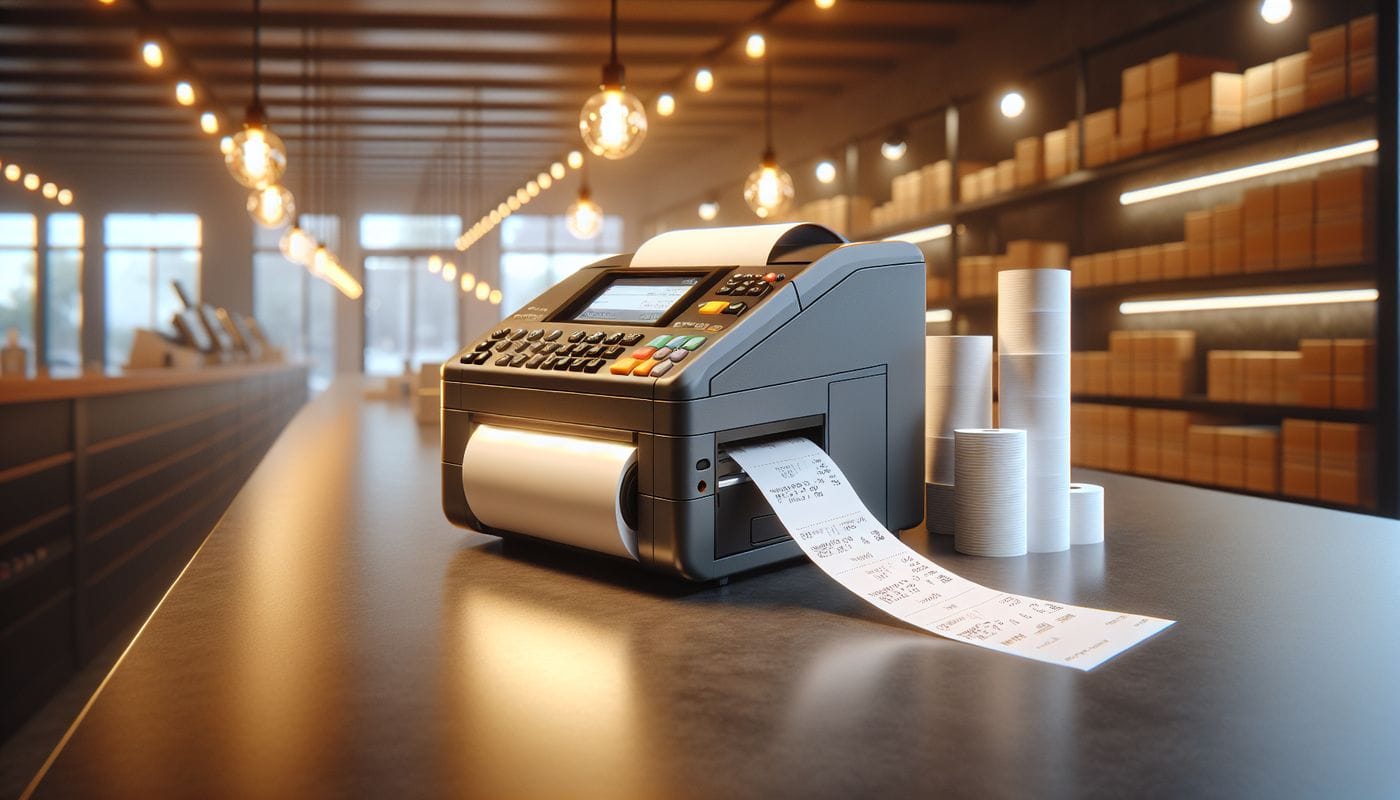
Thermal receipt printers use heat to create images on specially coated thermal paper, making them the preferred choice for high-volume Indian retail stores. These printers offer exceptional speed and convenience, printing receipts at 150-300mm per second, which significantly reduces customer waiting time during peak hours.
Key Advantages of Thermal Printers
The primary strength of thermal printers lies in their operational efficiency. They operate silently, making them ideal for premium retail environments where noise can impact customer experience. The compact design saves valuable counter space, while the absence of ribbons or ink cartridges eliminates the mess and frequent maintenance associated with traditional printing methods.
Popular thermal printer models in India include the TVS RP 3160 Star (₹4,500), Epson TM-T82III (₹6,800), and Zebra ZD230 (₹7,200). These models offer excellent GST compliance features when connected to proper billing software, automatically formatting receipts with required tax details, GSTIN numbers, and HSN codes as mandated by the Goods and Services Tax Network.
Thermal Printer Limitations in Indian Conditions
Despite their advantages, thermal printers face significant challenges in Indian retail environments. The thermal paper is sensitive to heat, humidity, and direct sunlight, causing receipts to fade within 6-12 months in typical Indian storage conditions. This creates problems for warranty claims, returns, and accounting record maintenance.
The ongoing operational costs can be substantial, with thermal paper rolls costing ₹8-12 each compared to ₹2-3 for regular paper. For stores printing 100+ receipts daily, this difference amounts to ₹15,000-20,000 annually in additional paper costs. Additionally, thermal printers cannot create carbon copies, which some traditional Indian businesses still require for their internal processes.
Dot Matrix Receipt Printers: Durability and Cost-Effectiveness
Dot matrix receipt printers create images by striking an inked ribbon against paper using a matrix of small pins, resulting in durable printouts that can withstand India's challenging climate conditions. These printers have been the backbone of Indian retail for decades, offering reliability and long-term cost advantages.
⚠️Watch OutMany retailers underestimate the noise factor of dot matrix printers, which can create an unprofessional atmosphere in premium retail environments and disturb customers during transaction processing.
Dot Matrix Printer Strengths
The durability advantage of dot matrix printers cannot be overstated in the Indian context. Receipts printed on regular paper maintain their clarity for 2-5 years, making them ideal for businesses that need long-term record keeping. The ability to print carbon copies simultaneously is valuable for traditional retail operations that maintain physical customer copies and store records.
Popular dot matrix models include the TVS MSP 240 Star (₹9,200), Epson LQ-310 (₹11,500), and Panasonic KX-MB1520 (₹13,800). These printers excel in dusty environments common in Indian markets, requiring minimal maintenance compared to their thermal counterparts.
Operational Challenges
The primary drawback of dot matrix printers is their slower printing speed, typically 50-100mm per second, which can create customer queues during busy periods. The mechanical printing process generates considerable noise, which may not suit modern retail environments. The initial investment is also higher, with quality dot matrix printers costing ₹8,000-15,000 compared to ₹3,000-8,000 for thermal alternatives.
Setup complexity is another consideration, as dot matrix printers require proper ribbon alignment and paper feeding mechanisms. Unlike thermal printers that simply require paper loading, dot matrix units need regular ribbon replacement and mechanical adjustments, which can be challenging for staff without technical training.
Head-to-Head Comparison: Price, Features, and India-Specific Support
When comparing total cost of ownership over three years, the choice between thermal and dot matrix printers depends heavily on transaction volume and environmental conditions. For a store processing 150 transactions daily, thermal printers cost approximately ₹45,000 (including printer and paper), while dot matrix printers cost around ₹35,000 for the same period.
GST Compliance and Integration
Both printer types support GST compliance when connected to appropriate billing software. However, thermal printers offer superior integration with modern POS systems and omnichannel retail platforms. Unlike traditional billing software like Vyapar or TallyPrime that require manual GST report generation, contemporary omnichannel retail platforms provide automated tax compliance with real-time GSTN integration.
The key difference lies in formatting flexibility. Thermal printers can adjust font sizes, add graphics, and create QR codes for digital payment integration with UPI systems like PhonePe and Paytm. Dot matrix printers are limited to basic text formatting but offer the advantage of creating legally compliant carbon copies for audit purposes.
Support and Service Network
Service support varies significantly between the two technologies. Thermal printer manufacturers like Epson and TVS have established strong service networks in major Indian cities, offering same-day repairs and readily available thermal paper supplies. Dot matrix printers, being older technology, have widespread support even in smaller towns, with local technicians familiar with mechanical repairs.
Spare parts availability favors dot matrix printers, as ribbons and mechanical components are standardized and easily replaceable. Thermal printer heads, however, require specialized replacement and can cost ₹1,500-3,000, often representing 30-50% of the printer's original value.
Which Receipt Printer Should Indian Retailers Choose?
The choice between thermal and dot matrix receipt printers should be based on your store's specific operational requirements, transaction volume, and environmental conditions. Thermal printers are the clear winner for high-volume stores (200+ daily transactions) in air-conditioned environments, while dot matrix printers suit smaller stores prioritizing durability and long-term cost savings.
Choose Thermal Printers If:
Your retail store handles high customer volumes during peak hours and requires fast transaction processing. Thermal printers are ideal for fashion stores, electronics retailers, and pharmacies where speed and customer experience are priorities. They work exceptionally well in air-conditioned environments and integrate seamlessly with modern POS systems and digital payment solutions.
Stores focusing on omnichannel retail operations benefit from thermal printers' ability to print QR codes, barcodes, and formatted receipts that enhance the customer experience across all touchpoints.
Choose Dot Matrix Printers If:
Your business requires durable receipts for warranty purposes, operates in dusty or high-temperature environments, or processes fewer than 100 daily transactions. Dot matrix printers are perfect for traditional retail businesses, spare parts dealers, and stores that need carbon copy functionality for internal record keeping.
The ability to withstand power fluctuations and mechanical stress makes dot matrix printers suitable for smaller towns and markets where infrastructure reliability is a concern.
How Commmerce Goes Beyond Just Receipt Printing
While choosing the right receipt printer is important, successful Indian retailers need more than just printing capabilities to thrive in 2026's competitive landscape. This is where Commmerce, an omnichannel retail operating system, transforms how retailers manage their entire business operations beyond simple billing and receipt generation.
Unlike traditional billing software like Marg ERP or TallyPrime that focus only on transaction processing, Commmerce provides a unified platform that connects your physical stores, online presence, inventory management, and delivery operations. Whether you choose thermal or dot matrix printers, Commmerce's offline-first POS system ensures continuous operations even during internet outages, automatically syncing data when connectivity returns.
Running a retail business in India?See how Commmerce unifies your stores, inventory, orders and delivery in one platform.Schedule a Free Demo
Integrated Hardware Management
Commmerce's strength lies in its ability to integrate seamlessly with both thermal and dot matrix printers while providing comprehensive retail hardware management. The platform automatically formats receipts for GST compliance, manages inventory across multiple locations, and provides real-time analytics on store performance metrics that help retailers make data-driven decisions.
The omnichannel approach means your receipt printing is just one component of a larger ecosystem that includes order management, customer relationship management, and delivery coordination. This holistic view enables better retail operations management and sustainable business growth.
Rather than managing separate systems for billing, inventory, and online sales, Commmerce provides a unified dashboard where receipt printing integrates with loyalty programs, promotional campaigns, and customer communication via WhatsApp, creating a seamless experience regardless of which printer technology you choose.
Conclusion
The choice between thermal and dot matrix receipt printers ultimately depends on your specific retail requirements, transaction volume, and operating environment. Thermal printers excel in speed and modern retail integration, while dot matrix printers offer durability and long-term cost advantages.
However, the real opportunity lies in choosing a comprehensive omnichannel retail platform that maximizes the potential of your chosen printing technology. By integrating receipt printing with inventory management, customer relationship management, and omnichannel operations, Indian retailers can build sustainable competitive advantages that extend far beyond the checkout counter.
Whether you choose thermal or dot matrix printing, ensure your technology decisions align with a broader digital transformation strategy that positions your retail business for long-term success in India's evolving market landscape.
Frequently Asked Questions
Q: Which is better for Indian retail stores - thermal or dot matrix receipt printers?
A: Thermal printers are better for most Indian retail stores due to faster printing speed, quieter operation, and compact size, though dot matrix printers offer better durability in dusty environments and lower long-term paper costs.
Q: Are thermal receipt printers GST compliant in India?
A: Yes, both thermal and dot matrix receipt printers can be GST compliant when connected to GST-compliant billing software that generates proper tax invoices with required fields like GSTIN, HSN codes, and tax breakdowns.
Q: What is the average cost difference between thermal and dot matrix receipt printers?
A: Thermal receipt printers typically cost ₹3,000-₹8,000 while dot matrix printers cost ₹8,000-₹15,000 initially, but dot matrix printers have lower ongoing paper costs at ₹2-3 per roll versus ₹8-12 for thermal paper.
Q: How long do thermal receipt printer papers last in Indian climate?
A: Thermal receipt papers typically last 6-12 months in Indian climate conditions, with longevity reduced by heat, humidity, and direct sunlight exposure, while dot matrix printouts can last several years without fading.
Q: Can receipt printers work offline during internet outages in retail stores?
A: Yes, receipt printers can work offline when connected to POS systems with offline capabilities, allowing stores to continue billing and printing receipts during internet outages, with data syncing once connectivity is restored.
Disclaimer: This article is for general informational purposes only and does not constitute legal, financial, or tax advice. GST rules, compliance requirements, and platform features may change over time — please verify the latest guidelines with a qualified professional or refer to official sources such as the GSTN or CBIC. Market statistics mentioned are based on publicly available estimates and may not reflect current figures. Commmerce product features referenced are accurate at the time of writing and subject to change.