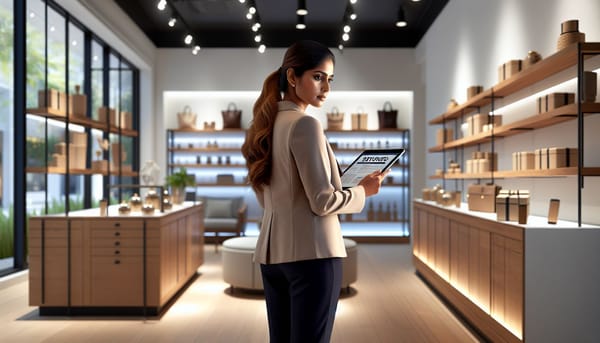
Dark Store Setup for Indian Fashion Chains: 2-Hour Delivery Hub Guide
Table of Contents
- Introduction
- The Dark Store Challenge for Indian Fashion Chains
- The Solution: Strategic Dark Store Setup for Fashion Retail
- Key Steps for Dark Store Implementation
- How Commmerce Enables Seamless Dark Store Operations
- Conclusion
- FAQs
TL;DR
- Dark stores enable Indian fashion chains to deliver within 2-4 hours by placing inventory closer to customers in fulfillment-only locations.
- Successful dark store setup requires real-time inventory sync, optimized picking workflows, and integration with delivery partners like Delhivery or Dunzo.
- Location selection within 5-10 km of target delivery areas and 2,000-5,000 sq ft space planning are critical for profitability.
- An omnichannel platform like Commmerce unifies dark store operations with existing retail stores and online channels for seamless order management.
Introduction
Dark store setup for Indian fashion chains has become essential for competing in the rapid delivery economy of 2026. As customer expectations shift toward same-day and 2-hour delivery, fashion retailers need strategically located fulfillment hubs that operate like stores but serve only online orders.
A dark store is a retail fulfillment center designed to look and operate like a regular store but exclusively handles online order picking and packing, without serving walk-in customers. For Indian fashion chains, dark stores bridge the gap between traditional warehousing and customer proximity, enabling ultra-fast delivery in metro cities.
This comprehensive guide covers everything from location selection and space planning to technology integration and operational workflows for setting up profitable dark stores in India's competitive fashion retail landscape.
The Dark Store Challenge for Indian Fashion Chains
Indian fashion retailers face unique challenges when implementing dark store operations that differ significantly from traditional warehouse fulfillment or regular store management.
The primary challenge is inventory allocation and sync. Fashion items have high SKU counts, seasonal variations, and size-color combinations that make demand forecasting complex. Retailers struggle to determine which products to stock in each dark store location without cannibalizing regular store sales or creating dead inventory.
⚠️Watch OutMany fashion chains fail by treating dark stores like mini-warehouses instead of customer-proximity fulfillment centers, leading to poor picking efficiency and high operational costs.
Real-time visibility gaps create another major hurdle. Without unified inventory management across regular stores, dark stores, and online channels, retailers face overselling, stockouts, and customer disappointment. Traditional tools like Tally or Marg ERP cannot handle the complexity of multi-location inventory sync required for dark store operations.
Delivery integration complexity poses additional challenges. Fashion retailers need seamless connections with multiple delivery partners like Delhivery, Dunzo, and Swiggy Instamart for different delivery speeds and coverage areas. Managing SLA commitments, delivery tracking, and exception handling across partners requires sophisticated order management capabilities.
Finally, operational cost management becomes critical. Dark stores must generate sufficient order volume to justify rent, staff, and technology costs while maintaining margins. Poor location selection, inefficient picking workflows, or inadequate demand forecasting can quickly turn dark stores into loss-making operations.
The Solution: Strategic Dark Store Setup for Fashion Retail
Successful dark store implementation for Indian fashion chains requires a systematic approach combining strategic location planning, technology integration, and operational excellence to create profitable 2-hour delivery hubs.
The foundation lies in demand-driven location selection. Fashion retailers should analyze their existing customer base, online order patterns, and delivery radius requirements to identify optimal dark store locations. Areas with high online penetration, affluent demographics, and proximity to multiple delivery destinations work best for fashion dark stores.
Technology-first operations differentiate successful dark stores from traditional fulfillment centers. An omnichannel retail platform that provides real-time inventory visibility, intelligent order routing, and automated picking workflows ensures efficient operations while maintaining accuracy for fashion items with multiple variants.
According to industry estimates, fashion retailers implementing strategic dark store networks see 40-60% improvement in delivery times and 25-30% increase in customer satisfaction scores compared to traditional warehouse fulfillment.
Hybrid inventory strategy maximizes dark store profitability. Rather than stocking everything, fashion retailers should focus on high-velocity items, trending styles, and essential sizes based on local demand patterns. This approach reduces inventory investment while maintaining high service levels.
Key Steps for Dark Store Implementation
Location Analysis and Selection
Location selection determines dark store success more than any other factor. Fashion retailers should prioritize areas within 5-10 km of target customers, ensuring 2-hour delivery feasibility while maintaining reasonable real estate costs.
Key location criteria include road connectivity for delivery vehicles, parking availability, ground floor access for efficient loading/unloading, and proximity to residential areas with high online shopping propensity. Avoid high-street locations since customer footfall is irrelevant for dark store operations.
Evaluate potential locations based on delivery radius coverage, competitor presence, rental costs (target ₹30-80 per sq ft depending on city tier), and expansion flexibility. Consider locations near existing stores to enable inventory sharing and staff optimization.
Space Planning and Layout Design
Fashion dark stores typically require 2,000-5,000 sq ft depending on SKU count and target delivery volume. Optimal layouts maximize picking efficiency while maintaining product organization and quality.
Design picking areas with logical product flow: trending items near packing stations, organized by category and size for quick location. Include dedicated sections for accessories, footwear, and seasonal items. Plan for 60-70% space utilization to allow for growth and seasonal inventory fluctuations.
| Space Type | Percentage | Purpose |
|---|---|---|
| Picking Area | 60-65% | Product storage and order picking |
| Packing Station | 15-20% | Order packing and quality check |
| Returns Processing | 8-10% | Returns inspection and restocking |
| Staff and Admin | 5-8% | Break room, manager office, utilities |
Include dedicated receiving areas for inventory transfers from main warehouses or suppliers, staging areas for outbound deliveries, and climate control for seasonal fashion items requiring special storage conditions.
Technology Integration and System Setup
Technology infrastructure forms the backbone of efficient dark store operations. Fashion retailers need integrated systems that handle inventory sync, order management, picking optimization, and delivery coordination seamlessly.
Implement barcode or RFID systems for accurate inventory tracking and picking verification. Each product location should be clearly marked with scannable codes to guide pickers efficiently. Integration with your omnichannel platform ensures real-time inventory updates across all channels.
Order management automation routes orders to the optimal dark store based on inventory availability, customer location, and delivery time requirements. Advanced systems also optimize picking routes within the dark store to minimize travel time and increase picker productivity.
💡Pro TipImplement zone-based picking for fashion items where one picker handles all orders in their assigned category area, reducing movement and increasing familiarity with product locations.
Inventory Planning and Allocation
Smart inventory allocation distinguishes profitable dark stores from expensive storage facilities. Fashion retailers must balance local demand patterns with inventory investment to maximize turns while minimizing stockouts.
Analyze historical sales data by location, seasonality, and customer demographics to determine optimal product mix for each dark store. Focus on high-velocity items, trending styles, and standard sizes that generate consistent demand.
Implement automated reorder triggers based on sales velocity and lead times. Fast-moving items should maintain higher safety stock levels while slow-moving inventory gets transferred to clearance channels or other locations. Consider implementing real-time procurement systems for seamless inventory replenishment.
Staffing and Operational Workflows
Efficient dark store operations require skilled staff and optimized workflows that prioritize speed without compromising accuracy. Fashion items demand careful handling and quality checks to maintain brand standards.
Staff requirements typically include 3-5 pickers, 1-2 packers, 1 supervisor, and 1 returns processor for a mid-size dark store handling 100-200 orders daily. Pickers should receive product training to understand sizing, materials, and handling requirements for different fashion categories.
Establish clear SOP for order processing: order receipt, inventory verification, picking with barcode scanning, quality check, packing with brand standards, and handover to delivery partners. Track picker productivity and accuracy metrics to identify training needs and workflow improvements.
Delivery Partner Integration
Seamless delivery partner integration ensures reliable fulfillment of 2-hour delivery promises. Fashion retailers should work with multiple partners to ensure coverage, capacity, and redundancy during peak periods.
Integrate with hyperlocal partners like Dunzo and Swiggy Genie for 1-2 hour delivery, regional players like Delhivery and Shadowfax for same-day delivery, and national partners for backup coverage. Each partner may have different API requirements, pickup procedures, and SLA commitments.
For comprehensive guidance on delivery operations, refer to our detailed Last-Mile Delivery and Fulfilment Guide for Indian Retailers and Sales Channel and Delivery Aggregators Guide.
How Commmerce Enables Seamless Dark Store Operations
Commmerce's Omnichannel Retail Operating System provides the integrated technology foundation that Indian fashion chains need to operate profitable dark stores while maintaining unified operations across all channels.
The platform's unified inventory management provides real-time visibility across regular stores, dark stores, warehouses, and online channels. Fashion retailers can track every SKU by size and color across all locations, enabling intelligent inventory allocation and preventing overselling scenarios that damage customer trust.
Intelligent Order Management System (OMS) automatically routes orders to the optimal fulfillment location based on inventory availability, customer proximity, and delivery time requirements. For fashion retailers, this means customers always receive their orders from the closest location with stock, minimizing delivery time and costs.
Fashion retailers using Commmerce see 35% faster order processing and 50% reduction in inventory mismatches across dark storesBased on customer implementations in 2026
The platform's integrated delivery management connects with all major Indian logistics partners including Delhivery, Shiprocket, and hyperlocal providers. Fashion retailers can offer multiple delivery options, track shipments in real-time, and handle exceptions seamlessly through a single dashboard.
Advanced analytics and reporting help fashion retailers optimize dark store performance. Track metrics like order fulfillment time, picker productivity, inventory turns, and delivery success rates. Use these insights to refine inventory allocation, adjust staffing levels, and improve operational efficiency.
The system's offline-first architecture ensures dark store operations continue even during internet outages. All picking, packing, and inventory updates sync automatically when connectivity returns, preventing operational disruptions that could impact customer delivery commitments.
For fashion chains implementing hub and spoke delivery models, Commmerce enables seamless coordination between central warehouses and multiple dark store locations, optimizing inventory distribution and reducing overall logistics costs.
Running a retail business in India?See how Commmerce unifies your stores, inventory, orders and delivery in one platform.Schedule a Free Demo
Conclusion
Setting up dark stores for Indian fashion chains requires strategic planning, technology integration, and operational excellence to create profitable 2-hour delivery hubs. Success depends on choosing optimal locations, implementing efficient workflows, and maintaining real-time inventory visibility across all channels.
The dark store setup process involves location analysis, space planning, technology integration, inventory allocation, staffing, and delivery partner coordination. Fashion retailers must balance speed and efficiency with accuracy and brand standards to meet customer expectations while maintaining profitability.
An omnichannel platform like Commmerce provides the integrated foundation needed to operate dark stores successfully while unifying operations with existing retail channels. The platform's inventory management, order routing, delivery integration, and analytics capabilities enable fashion retailers to compete effectively in India's rapid delivery economy.
Start your dark store implementation journey today to capture the growing demand for ultra-fast fashion delivery in Indian metro cities. Schedule a Free Demo
FAQs
Q: What is a dark store for fashion retailers?
A: A dark store is a retail fulfillment center that looks like a regular store but serves only online orders, not walk-in customers. Fashion retailers use dark stores to store inventory closer to customers for faster delivery, typically 2-4 hours in urban areas.
Q: How much space is needed for a fashion dark store?
A: A typical fashion dark store requires 2,000-5,000 sq ft depending on SKU count and delivery radius. This includes picking areas, packing stations, returns processing, and staff facilities.
Q: What technology is required for dark store operations?
A: Dark stores need an omnichannel platform with real-time inventory sync, order management system, barcode scanning for picking, delivery partner integrations, and analytics for demand forecasting.
Q: How to choose the right location for a fashion dark store?
A: Choose locations within 5-10 km of your target delivery area, with good road connectivity, adequate parking for delivery vehicles, and reasonable rent. Avoid high-street locations since customers won't visit.
Q: What are the operational costs of running a dark store?
A: Dark store costs include rent (₹30-80 per sq ft), staff salaries (₹15,000-25,000 per picker), utilities, technology platform fees, and delivery charges. Total monthly costs typically range from ₹2-8 lakhs depending on size and location.
Disclaimer: This article is for general informational purposes only and does not constitute legal, financial, or tax advice. GST rules, compliance requirements, and platform features may change over time. Please verify the latest guidelines with a qualified professional or refer to official sources such as the GSTN or CBIC. Market statistics mentioned are based on publicly available estimates and may not reflect current figures. Commmerce product features referenced are accurate at the time of writing and subject to change.