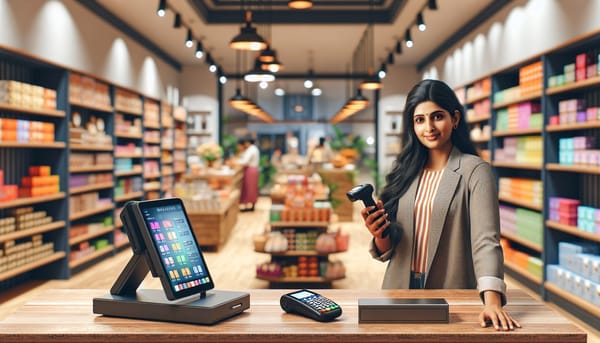
Handheld Barcode Scanner Guide for Indian Multi-Store Chains 2026
Table of Contents
- Introduction
- The Problem Indian Retailers Face
- The Solution: What to Look For
- Key Features and Considerations
- How Commmerce Helps
- Conclusion
- FAQs
TL;DR
- Handheld barcode scanners boost inventory accuracy by 95% and reduce billing time by 60% for Indian multi-store retail chains.
- Choose 2D wireless scanners with IP54+ durability rating, 12-hour battery life, and GST software integration for optimal performance.
- Quality handheld scanners cost ₹8,000-₹25,000 per unit but deliver ROI within 6 months through reduced shrinkage and faster operations.
- Integration with omnichannel retail platforms like Commmerce enables real-time inventory sync across all store locations and online channels.
Introduction
Choosing the right handheld barcode scanner guide for Indian multi-store chains in 2026 is crucial for streamlining operations and maintaining accurate inventory across multiple locations. As Indian retail chains expand rapidly, the need for efficient barcode scanning solutions has become more critical than ever.
Handheld barcode scanners are portable devices that read product barcodes wirelessly, enabling retail staff to quickly process inventory, conduct stock takes, and manage products across warehouse and store floor environments without being tethered to fixed POS terminals.
With over 70 million retail establishments across India and the growing adoption of organized retail formats, according to the India Brand Equity Foundation, multi-store chains are increasingly investing in barcode technology to maintain competitive advantages and operational efficiency.
The Problem Indian Retailers Face
Indian multi-store retail chains face significant operational challenges that handheld barcode scanners can address effectively.
Manual inventory management across multiple store locations leads to frequent stock discrepancies, with retailers typically experiencing 2-5% inventory shrinkage due to human errors in counting and recording. During peak seasons like Diwali or wedding seasons, stores struggle with long customer queues as staff manually search for products and verify prices.
Manual stock checking takes 40% longer than barcode scanningIndustry estimates from organized retail chains
Stock verification processes that should take minutes often stretch to hours, especially during monthly audits or when transferring inventory between stores. Staff productivity suffers when employees spend excessive time on administrative tasks rather than customer service.
Traditional POS-bound barcode scanning limits mobility, preventing staff from conducting floor inventory checks or assisting customers anywhere in the store. This constraint becomes particularly problematic for larger format stores or chains with warehouse operations.
Integration challenges with existing billing software like Tally Prime or Marg ERP often result in disconnected systems, where barcode data doesn't sync properly with inventory management and GST billing requirements.
The Solution: What to Look For
The solution lies in selecting handheld barcode scanners specifically designed for Indian multi-store retail operations with the right combination of durability, connectivity, and software integration capabilities.
Modern handheld scanners eliminate the constraints of wired POS systems by providing wireless connectivity options including Bluetooth, WiFi, and cellular connections. This mobility enables staff to conduct inventory checks anywhere in the store or warehouse while maintaining real-time data synchronization.
Look for scanners with robust construction ratings of IP54 or higher to withstand the demanding conditions of Indian retail environments, including dust, humidity, and frequent handling. Battery life should support full-day operations with at least 8-12 hours of continuous scanning capability.
Integration capability with popular Indian retail software systems ensures seamless data flow between scanning operations and your existing GST billing, inventory management, and accounting systems. The scanner should support standard data capture protocols and offer easy configuration for your specific retail management platform.
Key Features and Considerations
Scanner Technology: 1D vs 2D Imaging
2D imaging scanners offer superior versatility for handheld barcode scanning applications in multi-store environments. Unlike 1D laser scanners that only read traditional linear barcodes, 2D scanners can capture QR codes, damaged barcodes, and even barcodes displayed on mobile screens.
This technology proves essential for modern Indian retail chains that need to scan UPI payment QR codes, product authentication codes, and loyalty program barcodes. 2D scanners also perform better with poor-quality or damaged barcode labels commonly found in Indian supply chains.
| Feature | 1D Laser Scanner | 2D Imaging Scanner |
|---|---|---|
| Barcode Types | 1D barcodes only | 1D, 2D, QR codes |
| Damaged Barcode Reading | Limited capability | Excellent performance |
| Price Range (₹) | ₹8,000 - ₹15,000 | ₹12,000 - ₹25,000 |
| Future-Proof | Limited | Highly adaptable |
Connectivity Options for Multi-Store Operations
Wireless connectivity remains the most critical feature for handheld barcode scanners in multi-store retail chains. Bluetooth connectivity provides reliable short-range connection to POS terminals and mobile devices, while WiFi enables direct integration with cloud-based inventory management systems.
Dual-mode scanners that support both Bluetooth and WiFi offer maximum flexibility, allowing staff to switch between connection methods based on proximity to base stations or network availability. Some advanced models include cellular connectivity for remote location scanning.
Consider scanners with offline scanning capability that can store barcode data locally when connectivity is temporarily unavailable, then sync automatically when reconnected. This feature proves invaluable in areas with inconsistent network coverage.
Durability and Environmental Resistance
Indian retail environments demand rugged handheld barcode scanners capable of withstanding daily wear and tear. Look for devices with Ingress Protection (IP) ratings of IP54 or higher, indicating protection against dust and water splashes.
Drop resistance specifications should include survival from drops of at least 1.5 meters onto concrete, as retail staff frequently work in fast-paced environments where accidental drops occur regularly. Reinforced housing materials and shock-absorbing designs extend scanner lifespan significantly.
⚠️Watch OutAvoid scanners with IP ratings below IP42, as they won't survive the dust and humidity conditions common in Indian warehouses and storage areas.
Battery Life and Charging Solutions
Battery performance directly impacts operational efficiency for handheld barcode scanner deployments. Target scanners offering minimum 8-12 hour battery life under normal scanning conditions, with some models providing up to 24 hours for extended shift operations.
Charging solutions should include both individual chargers and multi-bay charging stations for managing multiple devices efficiently. Quick-charging capabilities that provide several hours of operation from 15-30 minutes of charging help maintain productivity during busy periods.
Removable battery options allow for hot-swapping during long operational periods, ensuring continuous scanning capability without device downtime.
Integration with GST Billing and Inventory Systems
Seamless integration with popular Indian retail software platforms ensures handheld barcode scanners deliver maximum value. The scanner should support standard HID (Human Interface Device) protocols that work with GST billing software, inventory management systems, and accounting platforms like Tally Prime.
Advanced integration features include real-time price lookup, automatic tax calculation, and instant inventory updates across multiple store locations. Some scanners offer APIs for custom integration with proprietary retail management systems.
For comprehensive guidance on barcode integration across multiple channels, refer to our detailed multi-store inventory synchronization guide that covers barcode management system implementation.
How Commmerce Helps
Commmerce provides seamless handheld barcode scanner integration within its comprehensive Omnichannel Retail Operating System, enabling Indian multi-store chains to maximize their scanning hardware investment through unified platform connectivity.
The platform's offline-first architecture ensures handheld scanners continue operating even during internet outages, with automatic data synchronization once connectivity returns. This capability proves essential for Indian retailers dealing with inconsistent network infrastructure across different store locations.
Real-time inventory synchronization across all connected stores means barcode scans instantly update stock levels chain-wide, preventing overselling and enabling accurate product availability information for customer inquiries. Staff can scan products at any location and immediately see inventory status across the entire retail network.
Running a retail business in India?See how Commmerce unifies your stores, inventory, orders and delivery in one platform.Schedule a Free Demo
Commmerce's integrated Order Management System (OMS) leverages handheld scanner data for intelligent order routing and fulfillment automation. When customers place online orders, the system automatically identifies optimal fulfillment locations based on real-time scanned inventory data, reducing delivery times and costs.
The platform includes native barcode label printing capabilities, working seamlessly with smart barcode label printers to ensure consistent labeling across all store locations. This integration eliminates the disconnected workflows common with traditional retail software combinations.
Advanced analytics and reporting features process scanned barcode data to generate insights about product movement, staff productivity, and inventory turnover rates. Multi-store chains can identify top-performing locations, optimize stock allocation, and make data-driven decisions about product placement and pricing strategies.
Unlike standalone barcode scanning solutions that require separate integration with billing software like Vyapar or Marg ERP, Commmerce provides end-to-end connectivity from handheld scanners through to GST-compliant invoicing and customer communication via WhatsApp.
Conclusion
Implementing the right handheld barcode scanner guide for Indian multi-store chains in 2026 requires careful consideration of technology specifications, connectivity options, durability requirements, and software integration capabilities. The investment in quality handheld scanning solutions delivers measurable returns through improved inventory accuracy, reduced operational costs, and enhanced customer service capabilities.
2D imaging scanners with wireless connectivity, robust construction, and comprehensive software integration provide the best foundation for growing retail operations across multiple locations. When combined with unified omnichannel platforms like Commmerce, these scanning solutions enable true operational efficiency and real-time visibility across entire retail networks.
Success depends on selecting scanners that not only meet current operational needs but also support future expansion and technology adoption, ensuring your barcode scanning investment continues delivering value as your retail chain grows and evolves in the competitive Indian market.
FAQs
Q: What is the best handheld barcode scanner for Indian retail chains?
A: The best handheld barcode scanner for Indian retail chains depends on your specific needs, but look for 2D imaging scanners with wireless connectivity, GST compliance features, and durability ratings of IP54 or higher to handle Indian retail environments.
Q: How much does a good handheld barcode scanner cost in India?
A: Quality handheld barcode scanners for Indian retail chains typically cost between ₹8,000 to ₹25,000 per unit, with wireless 2D scanners being more expensive than basic wired 1D scanners but offering better long-term value.
Q: What connectivity options should I look for in a handheld scanner?
A: For multi-store chains, prioritize handheld scanners with dual connectivity options like Bluetooth and WiFi, USB charging capabilities, and the ability to work offline with data sync when reconnected to your POS system.
Q: Can handheld barcode scanners work with GST billing software?
A: Yes, modern handheld barcode scanners integrate seamlessly with GST-compliant billing software through standard protocols, enabling automatic product lookup, price verification, and real-time inventory updates across multiple store locations.
Q: How do I choose between 1D and 2D barcode scanners for my retail chain?
A: Choose 2D barcode scanners for multi-store chains as they can read both traditional barcodes and QR codes, support future payment integrations like UPI QR codes, and offer better versatility for omnichannel retail operations.
Disclaimer: This article is for general informational purposes only and does not constitute legal, financial, or tax advice. GST rules, compliance requirements, and platform features may change over time. Please verify the latest guidelines with a qualified professional or refer to official sources such as the GSTN or CBIC. Market statistics mentioned are based on publicly available estimates and may not reflect current figures. Commmerce product features referenced are accurate at the time of writing and subject to change.