Multi-Store Sales Analytics Dashboard for Indian Fashion Chains 2026
Table of Contents
- Introduction
- The Problem Indian Fashion Retailers Face
- The Solution: What to Look For
- Key Features Every Dashboard Must Have
- How Commmerce Helps Fashion Chains Scale
- Conclusion
- Frequently Asked Questions
TL;DR
- Multi-store sales analytics dashboards provide unified visibility across all fashion retail locations and channels, enabling data-driven decisions and improved profitability.
- Indian fashion chains need specialized dashboards that handle seasonal trends, regional preferences, GST compliance, and omnichannel customer journeys in one unified view.
- Key features include real-time inventory tracking, store performance comparison, customer analytics, and automated reporting that saves hours of manual data compilation.
- Modern omnichannel retail platforms like Commmerce integrate analytics directly into the operating system, eliminating the need for separate reporting tools and ensuring accurate, real-time insights.
Introduction
The multi-store sales analytics dashboard has become the backbone of successful Indian fashion chains in 2026. As fashion retailers expand beyond single locations, the complexity of managing multiple stores, online channels, and diverse customer segments creates an urgent need for unified data visibility.
Fashion retailers operating 2 to 50 stores across India are discovering that traditional reporting methods using Excel sheets and manual data compilation simply cannot keep pace with modern retail demands. The ability to compare store performances, track inventory movements, understand customer behavior patterns, and identify profitable trends requires a sophisticated analytics approach that consolidates data from every touchpoint.
According to industry estimates, fashion retailers using unified analytics dashboards report 25-30% improvement in decision-making speed and 15-20% increase in overall profitability compared to those relying on fragmented reporting systems.
💡Pro TipThe most successful fashion chains view their analytics dashboard as a daily operational tool, not just a monthly reporting system.
The Problem Indian Fashion Retailers Face
Indian fashion chains struggle with fragmented data that exists in silos across different systems and locations. Store managers maintain separate Excel sheets, inventory data sits in one system, online sales data in another, and customer information scattered across multiple touchpoints.
The seasonal nature of fashion retail in India compounds these challenges. During festival seasons like Diwali or wedding seasons, retailers need real-time visibility into which products are selling where, which stores are underperforming, and how to redistribute inventory for maximum sales impact. Without a unified analytics dashboard, these critical decisions are made with incomplete information.
Regional preferences add another layer of complexity. A kurta design that sells well in Delhi might not perform in Chennai, but without proper analytics, retailers cannot identify these patterns quickly enough to adjust their strategies. The result is overstocking in some regions while missing opportunities in others.
GST compliance reporting becomes a nightmare when sales data from multiple stores needs to be consolidated manually. Fashion retailers often spend days preparing reports that should be available instantly, losing valuable time that could be spent on growth activities.
The rise of omnichannel shopping behavior means customers might discover products online, visit a physical store to try them, and complete purchases through WhatsApp. Traditional systems like Tally Prime or Marg ERP cannot track these complex customer journeys, leaving retailers blind to their most profitable customer segments.
The Solution: What to Look For
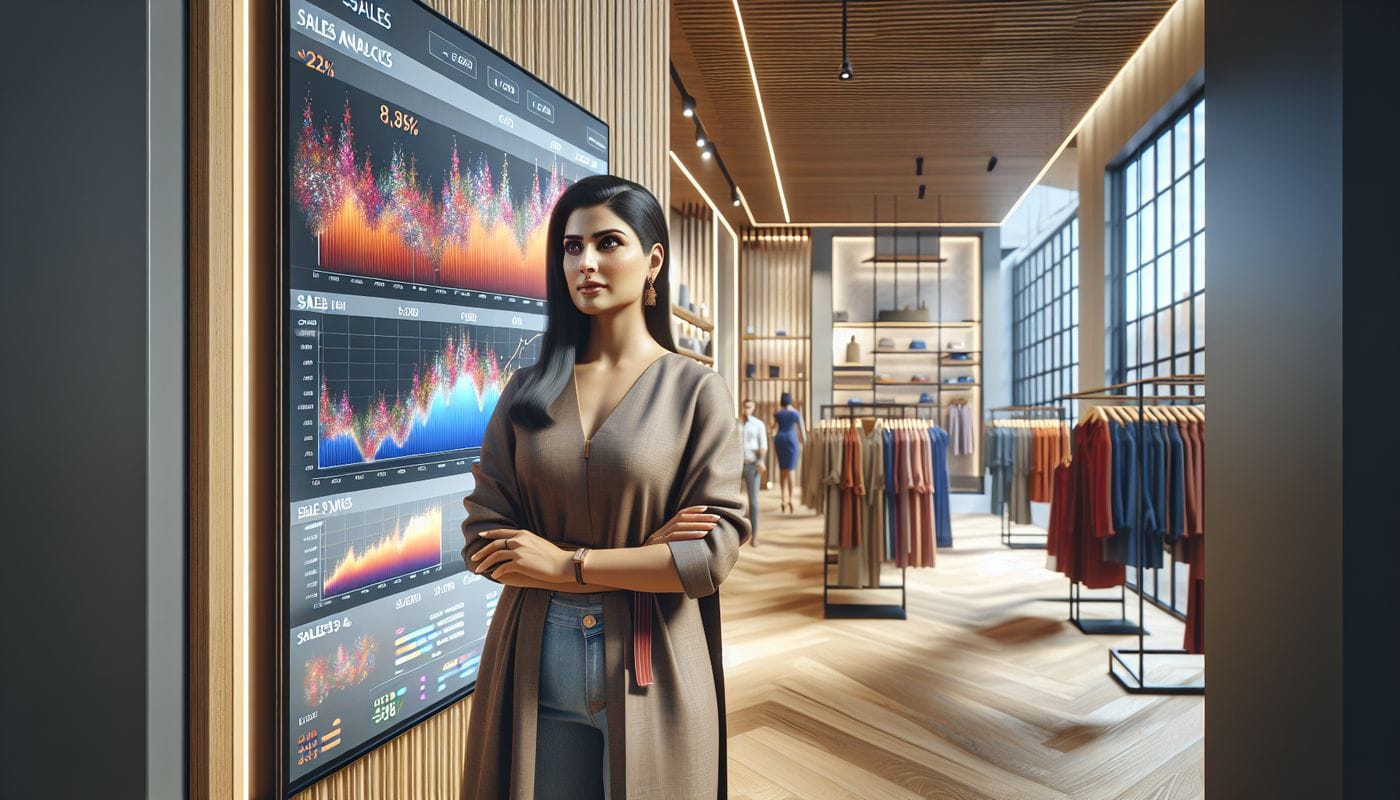
A comprehensive multi-store sales analytics dashboard for fashion chains should provide real-time unified reporting across all channels and locations. The ideal solution consolidates data from POS systems, e-commerce platforms, inventory management, and customer touchpoints into one accessible interface.
Look for dashboards that offer customizable views for different stakeholders. Store managers need different metrics than regional managers or business owners. The system should present relevant data to each user role without overwhelming them with unnecessary information.
Integration capabilities are crucial. Your analytics dashboard should seamlessly connect with existing systems including Tally Prime for accounting, payment gateways like Razorpay and PhonePe, and logistics providers like Delhivery and Shiprocket. This ensures data accuracy without manual data entry.
Mobile accessibility has become non-negotiable in 2026. Fashion retail owners and managers need to access critical metrics while traveling between stores or sourcing products. The dashboard should provide full functionality on mobile devices with offline capability for areas with poor internet connectivity.
According to the India Brand Equity Foundation, the Indian retail sector is expected to grow significantly, making sophisticated analytics tools essential for staying competitive in this expanding market.
Fashion retailers with unified analytics report 40% faster inventory turnoverIndustry estimates from omnichannel fashion chains, 2026
Key Features Every Dashboard Must Have
Real-Time Sales Tracking Across All Channels
Real-time sales tracking provides instant visibility into performance across physical stores, online channels, and marketplace platforms. Fashion retailers need to monitor sales velocity during peak hours, track popular products, and identify slow-moving inventory before it becomes dead stock.
The system should display sales data in multiple formats including hourly trends, daily comparisons, and seasonal patterns. This granular view helps retailers understand customer behavior patterns and optimize staffing, inventory placement, and promotional strategies.
Store Performance Comparison and Benchmarking
Comparative analytics reveal which stores are outperforming and why. The dashboard should rank stores by revenue, profit margins, inventory turnover, and customer satisfaction metrics. This information helps retailers identify best practices from top-performing locations and replicate them across other stores.
Geographic and demographic insights add context to store performance data. Understanding that a store in a college area sells more casual wear while a business district store moves more formal wear enables better inventory planning and targeted marketing.
Inventory Analytics and Movement Insights
Inventory analytics track product movement patterns, identify fast and slow-moving items, and predict future demand based on historical data. For fashion retailers, this includes seasonal trend analysis, size distribution insights, and color preference patterns across different locations.
The system should alert managers when inventory levels drop below optimal thresholds and suggest redistribution opportunities between stores. This prevents stockouts at high-performing locations while reducing excess inventory at slower stores.
| Analytics Feature | Traditional Systems | Modern Dashboards |
|---|---|---|
| Data Update Frequency | Daily or weekly manual compilation | Real-time automatic updates |
| Multi-Channel View | Separate reports for each channel | Unified omnichannel dashboard |
| Store Comparison | Manual Excel calculations | Automated benchmarking and ranking |
| Mobile Access | Desktop-only reports | Full mobile functionality |
| Predictive Analytics | Historical data only | Trend forecasting and demand planning |
Customer Behavior and Purchase Pattern Analysis
Understanding customer behavior across multiple touchpoints provides insights into shopping preferences, seasonal buying patterns, and lifetime value calculations. The analytics dashboard should track customer journeys from first interaction through repeat purchases across all channels.
Segment analysis helps retailers identify their most valuable customers, understand demographic preferences, and create targeted marketing campaigns. This is particularly important for fashion retailers who serve diverse customer segments with varying preferences and purchasing power.
Automated Reporting and GST Compliance
Automated reporting eliminates manual data compilation and reduces errors in financial reporting. The system should generate daily, weekly, and monthly reports automatically, with customizable formats for different stakeholders including investors, auditors, and tax authorities.
GST compliance features should include automatic tax calculations, e-invoice generation, and GSTN filing support. This ensures accuracy in tax reporting while saving significant time during monthly and quarterly filings.
⚠️Watch OutMany retailers focus only on sales metrics but ignore profitability analytics, leading to revenue growth without corresponding profit increases.
How Commmerce Helps Fashion Chains Scale
Commmerce provides Indian fashion chains with a comprehensive multi-store sales analytics dashboard integrated directly into its Omnichannel Retail Operating System. Unlike standalone analytics tools that require separate data integration, Commmerce's analytics are built into the core platform, ensuring real-time accuracy and eliminating data synchronization issues.
The platform's unified dashboard provides fashion retailers with complete visibility across all stores, online channels, and marketplaces. Store managers can compare performance metrics, track inventory movements, and identify trends from a single interface that works seamlessly on mobile devices and desktop computers.
Real-time inventory analytics help fashion chains optimize their product mix across different locations. The system automatically identifies fast-moving products, suggests inventory transfers between stores, and alerts managers to potential stockouts before they impact sales. This level of inventory intelligence is particularly valuable during seasonal peaks when demand patterns shift rapidly.
Customer analytics within Commmerce track purchase behavior across all touchpoints, including in-store visits, online browsing, WhatsApp inquiries, and marketplace interactions. This omnichannel view helps fashion retailers understand their customers' complete journey and optimize each interaction point for better conversion rates.
The platform's GST compliance features automatically generate accurate tax reports from consolidated sales data across all channels and locations. Fashion retailers using Commmerce report saving 15-20 hours monthly on tax compliance and financial reporting tasks that were previously handled manually.
Integration with popular Indian payment systems like Razorpay, PhonePe, and Paytm ensures that transaction data flows seamlessly into the analytics dashboard. Similarly, logistics integrations with Delhivery, Shiprocket, and Ecom Express provide complete visibility into delivery performance and customer satisfaction metrics.
The system's offline-first design ensures that analytics remain available even during internet outages. Sales data continues to be captured and automatically syncs when connectivity returns, maintaining data integrity across all locations.
Running a retail business in India?See how Commmerce unifies your stores, inventory, orders and delivery in one platform.Schedule a Free Demo
For fashion chains looking to expand their analytics capabilities, Commmerce offers specialized reporting for seasonal trends, regional preferences, and size distribution analysis. These insights help retailers make informed decisions about product procurement, store-wise inventory allocation, and targeted marketing campaigns.
The platform's role-based access ensures that different stakeholders see relevant metrics without information overload. Store managers focus on daily operations metrics, regional managers compare store performances, and business owners access strategic insights and profitability analysis.
To learn more about implementing comprehensive analytics for your fashion chain, explore our guide on Cross-Store Customer Analytics for Indian Retail Chains Guide and discover how Omnichannel vs Multichannel Retail for Indian Fashion Chains: The 2026 Growth Strategy can transform your business operations.
Conclusion
The multi-store sales analytics dashboard has evolved from a nice-to-have tool to an essential competitive advantage for Indian fashion chains in 2026. Retailers who embrace unified analytics gain significant advantages in inventory optimization, customer understanding, and operational efficiency over competitors still relying on manual reporting methods.
Success in modern fashion retail depends on making data-driven decisions quickly and accurately. The complexity of managing multiple stores, diverse customer segments, and omnichannel interactions requires sophisticated analytics capabilities that can only be delivered through integrated retail operating systems.
Fashion chains that implement comprehensive analytics dashboards report improved profitability, faster decision-making, and better customer satisfaction. The investment in proper analytics infrastructure pays for itself through reduced inventory waste, optimized store performance, and improved customer retention rates.
As the Indian retail market continues to evolve, the gap between analytics-driven retailers and those using traditional methods will only widen. The time to implement a robust multi-store sales analytics dashboard is now, before competitive pressures make it a necessity for survival rather than growth.
Frequently Asked Questions
Q: What is a multi-store sales analytics dashboard?
A: A multi-store sales analytics dashboard is a unified reporting system that consolidates sales data from all retail locations and channels into one centralized view, enabling retailers to track performance, compare store metrics, and make data-driven decisions across their entire business network.
Q: Why do Indian fashion chains need specialized analytics dashboards?
A: Indian fashion chains face unique challenges like seasonal demand fluctuations, regional preferences, GST compliance reporting, and diverse customer segments across urban and rural markets that require specialized analytics tools designed for the Indian retail environment.
Q: What key metrics should a fashion retail analytics dashboard track?
A: A fashion retail analytics dashboard should track sales by store and product, inventory turnover, customer acquisition costs, average transaction value, seasonal trends, staff performance, channel-wise revenue, and GST compliance metrics for comprehensive business visibility.
Q: How does real-time analytics help fashion retailers make better decisions?
A: Real-time analytics enables fashion retailers to respond quickly to trends, manage inventory efficiently, optimize pricing strategies, identify top-performing products and stores, and prevent stockouts during peak seasons by providing immediate visibility into business performance.
Q: Can analytics dashboards integrate with existing retail systems in India?
A: Modern analytics dashboards can integrate with popular Indian retail systems like Tally Prime, Marg ERP, and various POS systems through APIs and data connectors, ensuring seamless data flow without disrupting existing business operations.
Disclaimer: This article is for general informational purposes only and does not constitute legal, financial, or tax advice. GST rules, compliance requirements, and platform features may change over time. Please verify the latest guidelines with a qualified professional or refer to official sources such as the GSTN or CBIC. Market statistics mentioned are based on publicly available estimates and may not reflect current figures. Commmerce product features referenced are accurate at the time of writing and subject to change.