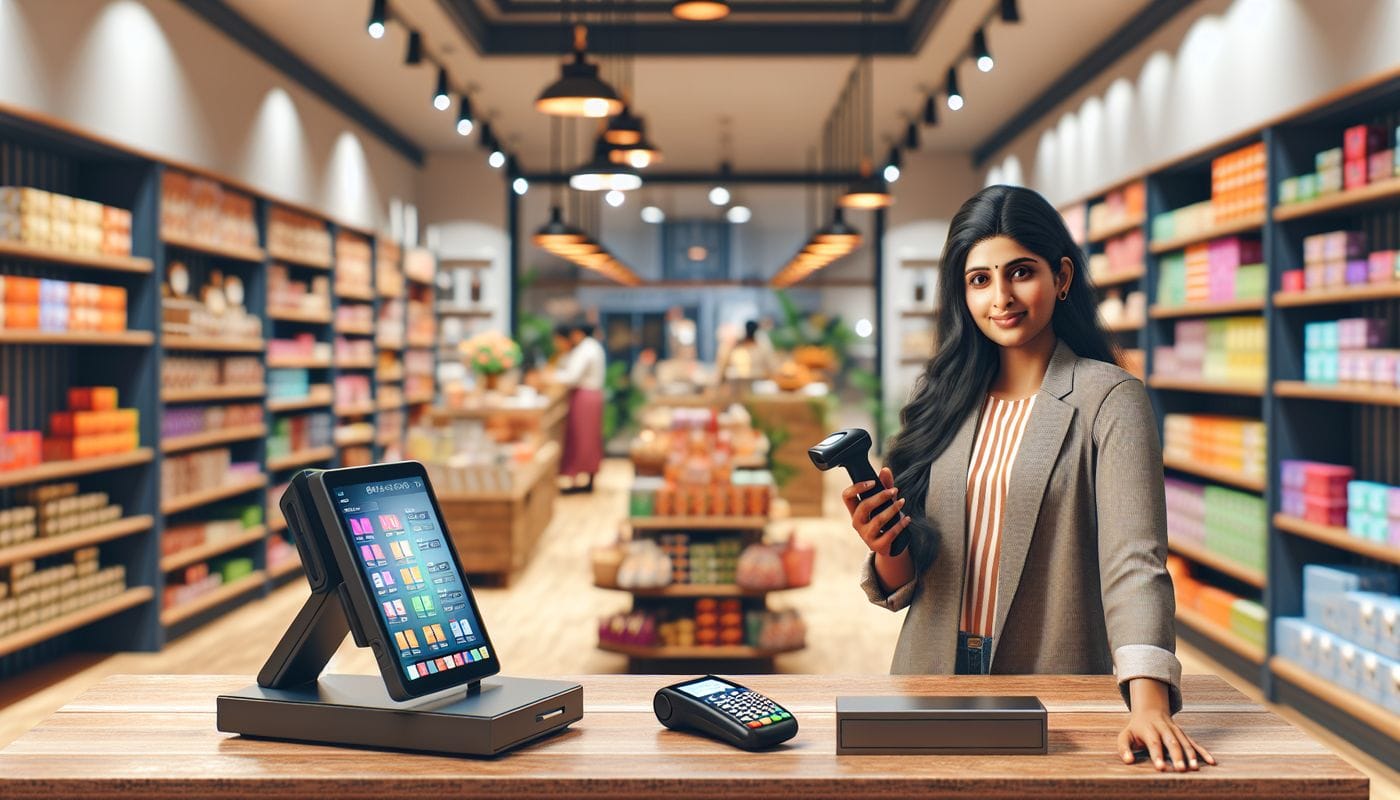
POS Hardware India: Barcode Scanner vs All-in-One Systems Guide 2026
Table of Contents
- Introduction
- Quick Comparison Table
- Barcode Scanner Systems: Detailed Breakdown
- All-in-One POS Systems: Detailed Breakdown
- Head-to-Head Comparison: Price, Features, and Support
- Which Should Indian Retailers Choose?
- How Commmerce Goes Beyond Both Hardware Options
- Conclusion
- Frequently Asked Questions
TL;DR
- All-in-one POS systems cost ₹25,000-80,000 but include everything needed for billing, while barcode scanners cost ₹3,000-15,000 but require separate billing software and hardware.
- Small retailers with 1-5 stores benefit more from all-in-one systems due to simplicity, while large chains prefer modular barcode scanner setups for flexibility.
- Both options support GST compliance and offline billing, but all-in-one systems require less technical setup and staff training.
- Modern omnichannel retail platforms like Commmerce work with both hardware types and add inventory sync, order management, and multi-store analytics.
POS Hardware India: Choosing Between Barcode Scanner and All-in-One Systems
POS hardware India market offers two main approaches for retail billing: standalone barcode scanner systems and integrated all-in-one terminals. This choice affects everything from your daily operations to long-term scalability across multiple stores.
The right POS hardware decision depends on your store count, transaction volume, and technical requirements. Both barcode scanners and all-in-one systems support GST compliance and work with popular Indian billing software, but they serve different retail scenarios.
💡Pro TipConsider your peak hour transaction volume first, as this determines whether you need the speed of dedicated scanners or the simplicity of all-in-one systems.
Quick Comparison: Barcode Scanner vs All-in-One POS Systems
| Criteria | Barcode Scanner System | All-in-One POS System |
|---|---|---|
| Initial Cost | ₹15,000-35,000 (with PC/tablet) | ₹25,000-80,000 (complete setup) |
| Setup Complexity | Moderate (multiple components) | Simple (plug and play) |
| Scanning Speed | Very fast (dedicated laser/2D) | Fast (built-in scanner) |
| Flexibility | High (modular components) | Limited (integrated design) |
| Space Required | More (separate components) | Less (compact design) |
| Best For | High-volume, multi-store chains | Small to medium retailers |
Barcode Scanner Systems: Detailed Breakdown for Indian Retailers
Barcode scanner systems consist of separate components: the scanner device, a computer or tablet, billing software, receipt printer, and cash drawer. This modular approach offers maximum flexibility but requires more technical setup.
Types of POS Hardware Barcode Scanners Available in India
Indian retailers can choose from three main scanner types. Handheld scanners (₹3,000-8,000) offer mobility for large items, presentation scanners (₹5,000-12,000) provide hands-free operation, and industrial scanners (₹8,000-15,000) handle high-volume scanning.
Most Indian brands like TVS Electronics, Zebra India, and Honeywell offer 1D and 2D scanning capabilities. 2D scanners cost ₹2,000-4,000 more but can read QR codes and damaged barcodes better.
Integration with Popular Indian Billing Software
Barcode scanners integrate seamlessly with established Indian billing software. Tally Prime charges ₹18,000 annually, Marg ERP costs ₹15,000-25,000, and Vyapar offers plans from ₹4,800 yearly. All support GST e-invoicing and GSTN integration as required by Central Board of Indirect Taxes and Customs.
Advantages of Modular Barcode Scanner Setups
The modular approach allows retailers to upgrade individual components. You can start with a basic laser scanner and add 2D capability later. If the printer breaks, you replace only that component instead of the entire system.
For fashion retailers managing thousands of SKUs, dedicated scanners offer superior speed. Professional barcode scanners can process 500+ scans per hour compared to 200-300 for all-in-one touchscreens.
⚠️Watch OutBarcode scanner systems require separate warranty and support for each component, increasing maintenance complexity for multi-store operations.
All-in-One POS Systems: Complete Analysis for Indian Stores
All-in-one POS systems combine touchscreen terminal, built-in scanner, thermal printer, and payment processing in a single device. Popular Indian brands like Pine Labs, Ezetap, and PayTM offer complete solutions starting at ₹25,000.
Leading All-in-One POS Hardware Brands in India
Pine Labs Plutus Smart costs ₹35,000-50,000 with built-in UPI, card payments, and GST billing. Ezetap POS terminals range from ₹28,000-45,000 with cloud-based inventory sync. PayTM All-in-One POS starts at ₹25,000 with integrated payment gateway.
International brands like Ingenico and Verifone offer premium terminals (₹45,000-80,000) with advanced features like NFC payments, dual screens, and enterprise-grade security.
Built-in Features and Indian Payment Integration
Modern all-in-one systems include native UPI integration, supporting PhonePe, Google Pay, and Paytm QR codes. Card readers accept Visa, Mastercard, and RuPay with automatic settlement to Indian bank accounts.
The integrated thermal printer handles 58mm and 80mm receipt formats required for GST compliance. Most systems print 150-200mm per second, suitable for moderate transaction volumes.
Advantages for Small to Medium Indian Retailers
All-in-one systems reduce training time significantly. Staff learn one device instead of multiple components. The compact design saves counter space, crucial for small Indian retail stores.
Warranty and support come from a single vendor, simplifying maintenance. If issues occur, you deal with one company instead of coordinating between scanner, printer, and software providers.
Head-to-Head Comparison: Price, Features, and India-Specific Support
Total Cost of Ownership Analysis
Barcode scanner systems have lower upfront hardware costs but higher software licensing fees. A complete setup costs ₹15,000-35,000 initially, plus ₹15,000-25,000 annually for software like Tally or Marg ERP.
All-in-one systems cost ₹25,000-80,000 upfront but often include software licensing for the first year. Ongoing costs are ₹5,000-12,000 annually for cloud services and updates.
Performance in Indian Retail Environments
Both systems handle India's challenging retail conditions differently. Dedicated scanners perform better in dusty environments common in Indian markets. All-in-one touchscreens need regular cleaning but offer better visibility in bright shop lighting.
Power consumption differs significantly. Barcode scanner systems with separate PC consume 150-250 watts, while all-in-one terminals use 80-120 watts, reducing electricity costs in markets with high power rates.
GST Compliance and Indian Tax Requirements
Both systems support mandatory GST features like HSN code tracking, tax rate calculation, and e-invoice generation. However, integration complexity varies.
All-in-one systems often have pre-configured GST templates for common Indian business types. Barcode scanner systems require manual GST setup in billing software, offering more customization but demanding technical expertise.
Running a retail business in India?See how Commmerce unifies your stores, inventory, orders and delivery in one platform.Schedule a Free Demo
Which POS Hardware Should Indian Retailers Choose in 2026?
The choice between barcode scanners and all-in-one POS systems depends on your specific retail scenario. Small retailers with 1-5 stores benefit more from all-in-one systems due to simplicity and integrated support.
Choose Barcode Scanner Systems If:
- You operate 10+ stores and need standardized, replaceable components
- Peak hour transaction volume exceeds 100 transactions per hour per terminal
- You manage 5,000+ SKUs requiring fast, accurate scanning
- Your IT team can handle multi-component setup and maintenance
- You prefer flexibility to upgrade individual components over time
Choose All-in-One POS Systems If:
- You have 2-8 stores with moderate transaction volumes
- Counter space is limited and aesthetics matter
- You want single-vendor support and warranty
- Staff training time needs to be minimized
- You prefer predictable, all-inclusive pricing
Industry-Specific Recommendations
Fashion and jewelry retailers benefit from dedicated all-in-one systems with customer-facing displays for price transparency. Grocery stores need fast barcode scanners to handle high product variety and volume.
Electronics retailers require 2D scanners for warranty card QR codes and serial number tracking. Pharmacy chains need barcode systems integrated with inventory management for expiry date tracking.
How Commmerce Goes Beyond Both Hardware Options
While choosing the right POS hardware is important, modern Indian retailers need more than just billing capabilities. Commmerce is an omnichannel retail operating system that works with both barcode scanners and all-in-one terminals while adding crucial business intelligence.
Unified Multi-Store Operations
Commmerce connects your POS hardware across all locations, providing real-time inventory sync between stores. Whether you use barcode scanners or all-in-one systems, our platform ensures stock levels update instantly across your entire retail network.
The system includes built-in Order Management System (OMS) capabilities, routing online orders to the nearest store with available inventory, regardless of your hardware choice.
Advanced Analytics and Reporting
Unlike traditional POS software that only handles billing, Commmerce provides comprehensive retail analytics. Track which products sell fastest at each location, identify peak hours across stores, and optimize staff scheduling based on real transaction data.
The platform integrates with popular Indian accounting software like Tally Prime while adding modern features like WhatsApp invoicing, customer loyalty programs, and automated reorder points.
Omnichannel Integration
Commmerce includes a built-in online store, social commerce tools, and marketplace integrations. Your POS hardware becomes part of a larger ecosystem connecting physical stores, online sales, and delivery operations.
Customers can buy online and pick up in-store, return online purchases at any physical location, or check product availability across all channels, creating a seamless shopping experience.
Conclusion
POS hardware India market offers solid options for both barcode scanner and all-in-one systems, each serving different retail needs. The key is matching your hardware choice to your business size, transaction volume, and technical capabilities.
However, hardware alone isn't enough for competitive retail operations in 2026. Modern retailers need omnichannel platforms like Commmerce that transform basic POS terminals into intelligent business management systems, providing the inventory sync, order management, and analytics required for multi-store success.
Consider your long-term growth plans when choosing POS hardware. While the initial decision between scanners and all-in-one systems matters, selecting a platform that grows with your business matters more.
Frequently Asked Questions
Q: Which is better for small Indian retailers: barcode scanner or all-in-one POS system?
A: For retailers with 2-10 stores, all-in-one POS systems are better as they combine billing, inventory tracking, and payment processing in one device, reducing setup complexity and training time.
Q: What is the price difference between barcode scanners and all-in-one POS systems in India?
A: Standalone barcode scanners cost ₹3,000-15,000 but require separate billing systems, while all-in-one POS systems range from ₹25,000-80,000 with everything included.
Q: Do all-in-one POS systems work offline in India?
A: Most modern all-in-one POS systems work offline and sync data automatically when internet connection is restored, ensuring uninterrupted billing during network outages.
Q: Can barcode scanners integrate with GST billing software in India?
A: Yes, most barcode scanners integrate with popular Indian billing software like Tally Prime, Marg ERP, and Vyapar for automatic GST invoice generation.
Q: Which POS hardware is better for high-volume Indian retail stores?
A: High-volume stores benefit from all-in-one systems with built-in thermal printers and fast processors that can handle 100+ transactions per hour without slowing down.
Disclaimer: This article is for general informational purposes only and does not constitute legal, financial, or tax advice. GST rules, compliance requirements, and platform features may change over time. Please verify the latest guidelines with a qualified professional or refer to official sources such as the GSTN or CBIC. Market statistics mentioned are based on publicly available estimates and may not reflect current figures. Commmerce product features referenced are accurate at the time of writing and subject to change.