Complete Retail Hardware Setup Guide for Indian Grocery Chains: Barcode Scanners, Thermal Printers & POS Terminals for Multi-Store Operations 2026
Table of Contents
- Introduction
- Hardware Challenges Indian Grocery Chains Face
- Essential Hardware Components for Success
- Barcode Scanner Selection Guide
- Thermal Printer Requirements
- POS Terminal Specifications
- Multi-Store Hardware Deployment Strategy
- How Commmerce Simplifies Hardware Management
- Conclusion
- Frequently Asked Questions
TL;DR
- Indian grocery chains need 2D omnidirectional barcode scanners, 80mm thermal printers, and offline-capable POS terminals for efficient multi-store operations.
- Budget ₹50,000 to ₹1,50,000 per store for complete hardware setup including scanners, printers, terminals, and backup equipment.
- Omnichannel platforms like Commmerce unify all hardware into one system, reducing costs and training requirements across multiple locations.
- Offline-first hardware prevents sales loss during internet outages, crucial for maintaining customer satisfaction in Indian retail environments.
Introduction
Setting up the right retail hardware infrastructure is critical for Indian grocery chains planning to scale operations across multiple locations in 2026. The complete retail hardware setup guide for Indian grocery chains covers essential barcode scanners, thermal printers, and POS terminals that power efficient multi-store operations.
Modern grocery chains need hardware that works seamlessly across physical stores, online orders, and delivery operations while handling India's unique requirements like GST compliance, UPI payments, and frequent power outages.
Hardware Challenges Indian Grocery Chains Face
Indian grocery chains face unique hardware challenges that international solutions often fail to address. Power fluctuations, internet connectivity issues, and diverse payment methods create specific requirements for retail hardware deployment.
Most chains struggle with hardware that breaks down frequently in Indian conditions, lacks local support, or doesn't integrate with Indian payment systems like UPI and digital wallets. Traditional hardware setups also fail when internet connectivity drops, causing checkout delays and frustrated customers.
⚠️Watch OutMany grocery chains buy cheap hardware that fails within months, costing more in downtime and replacements than investing in quality equipment upfront.
Multi-store operations face additional complexity with hardware management across locations. Without centralized monitoring, chains discover equipment failures only when customers complain about slow checkout or billing errors.
According to the India Brand Equity Foundation, retail technology adoption is accelerating, but many chains still rely on disconnected hardware systems that prevent efficient omnichannel operations.
Essential Hardware Components for Success
Successful grocery chain hardware setup requires four core components working together seamlessly. These components must handle high-volume transactions while maintaining reliability in challenging Indian operating conditions.
Core Hardware Requirements
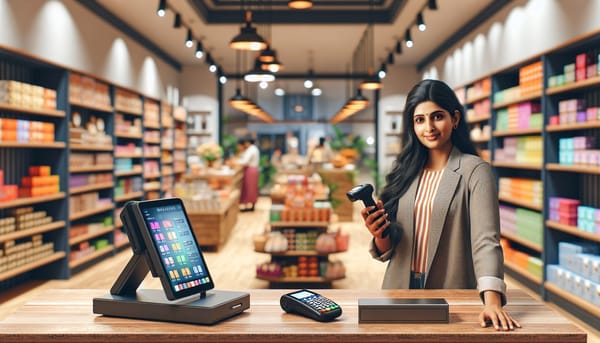
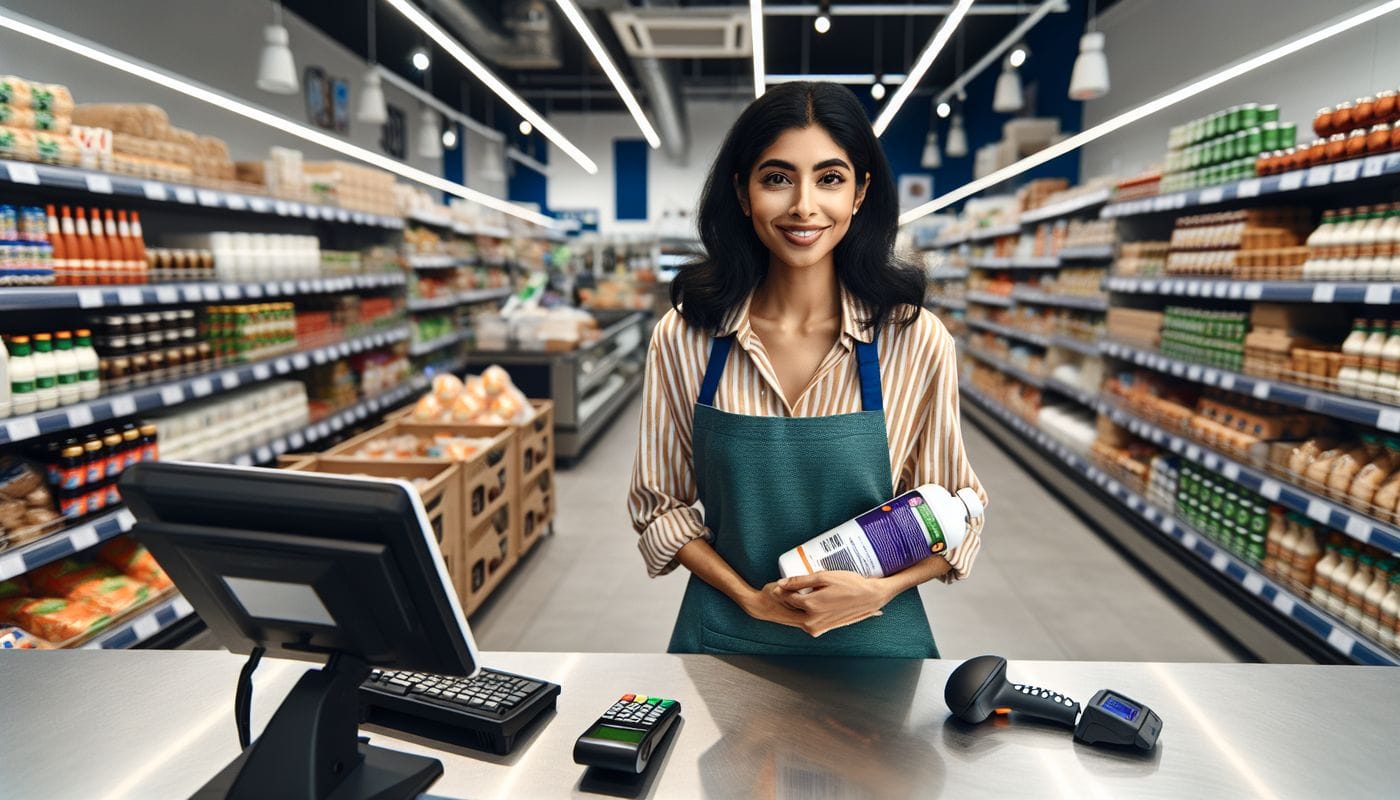
Every grocery store location needs barcode scanners for product identification, thermal printers for receipts and labels, POS terminals for transaction processing, and cash management systems for secure money handling.
| Component | Function | Typical Cost (₹) |
|---|---|---|
| Barcode Scanner | Product identification & inventory tracking | ₹8,000 - ₹25,000 |
| Thermal Printer | Receipt printing & label generation | ₹12,000 - ₹30,000 |
| POS Terminal | Transaction processing & payment handling | ₹20,000 - ₹80,000 |
| Cash Drawer | Secure cash storage & management | ₹3,000 - ₹8,000 |
Integration Requirements
Hardware components must integrate with inventory management systems, accounting software like Tally, and payment gateways including Razorpay and PhonePe for complete operational efficiency.
Barcode Scanner Selection Guide
Choosing the right barcode scanners for grocery chain operations requires understanding scan speed, accuracy, and durability requirements specific to high-volume retail environments.
2D Omnidirectional Scanners for Grocery Checkout
2D omnidirectional scanners are ideal for grocery stores because they read barcodes from any angle, reducing checkout time and training requirements for staff members.
These scanners handle damaged or poorly printed barcodes better than traditional laser scanners, crucial for fresh produce and packaged goods that may have wrinkled or wet labels.
Handheld vs. Fixed Mount Options
Handheld scanners offer flexibility for large items and inventory management, while fixed mount scanners speed up checkout for small packaged goods. Most grocery chains need both types for optimal operations.
For detailed scanner selection criteria, refer to our comprehensive Handheld Barcode Scanner Guide for Indian Multi-Store Chains 2026.
💡Pro TipChoose scanners with IP54 rating or higher to handle dust and moisture in Indian grocery environments, extending equipment lifespan significantly.
Thermal Printer Requirements
Thermal printers for grocery chains must handle high-volume receipt printing while maintaining print quality for GST-compliant invoices and customer receipts.
80mm Thermal Printers for Standard Operations
80mm thermal printers provide optimal balance between receipt size and printing speed, accommodating detailed GST information while maintaining fast checkout times during peak hours.
These printers typically offer 200-300mm per second printing speed, essential for busy grocery stores processing hundreds of transactions daily across multiple checkout counters.
Label Printing Capabilities
Modern grocery operations require printers capable of producing both customer receipts and product labels for inventory management, price changes, and promotional offers.
Look for printers supporting multiple paper widths and adhesive label stock for maximum operational flexibility across different grocery chain requirements.
POS Terminal Specifications
POS terminals serve as the central processing unit for grocery store operations, requiring specifications that support multi-channel order processing and offline functionality.
Processing Power and Memory Requirements
Grocery chains need POS terminals with minimum 4GB RAM and quad-core processors to handle simultaneous barcode scanning, payment processing, and inventory updates without performance delays.
Local storage capacity of at least 64GB ensures offline operations continue during internet outages, storing transaction data until connectivity returns for automatic synchronization.
Payment Integration Support
Modern POS terminals must support UPI payments, card readers, and digital wallet integrations native to Indian payment ecosystem including PhonePe, Paytm, and Google Pay.
Unlike basic billing software like Vyapar or Marg ERP that requires separate payment devices, integrated POS terminals streamline the entire transaction process through single hardware units.
Multi-Store Hardware Deployment Strategy
Deploying hardware across multiple grocery store locations requires standardization, centralized monitoring, and scalable support systems to maintain operational efficiency.
Standardized Hardware Configurations
Using identical hardware configurations across all store locations reduces training costs, simplifies maintenance, and enables bulk purchasing discounts from vendors.
Create hardware templates based on store size: compact stores need 1-2 checkout stations, medium stores require 3-4 stations, and large format stores need 6+ stations with dedicated customer service counters.
Remote Monitoring and Support
Centralized hardware monitoring prevents equipment failures from disrupting operations by providing early warning alerts for maintenance needs across all store locations.
This approach reduces the need for on-site technical staff at each location while ensuring consistent hardware performance standards across the entire grocery chain network.
Running a retail business in India?See how Commmerce unifies your stores, inventory, orders and delivery in one platform.Schedule a Free Demo
How Commmerce Simplifies Hardware Management
Commmerce, an omnichannel retail operating system, transforms hardware complexity into unified operations by integrating all devices through a single platform designed specifically for Indian retailers.
Offline-First Hardware Support
Commmerce's offline-first architecture ensures barcode scanners, thermal printers, and POS terminals continue working during internet outages, automatically syncing transactions when connectivity returns.
This approach prevents lost sales and customer frustration during common network disruptions that affect Indian retail operations, unlike cloud-only solutions that fail without internet access.
Unified Device Management
The platform provides centralized monitoring and configuration for all hardware across multiple store locations, reducing IT overhead and ensuring consistent performance standards.
Hardware health monitoring alerts store managers about maintenance needs before equipment failures occur, minimizing downtime and repair costs across grocery chain operations.
GST and Payment Integration
Commmerce integrates thermal printers with automated GST invoice generation and e-invoice compliance, while connecting POS terminals with Indian payment gateways like Razorpay and PhonePe natively.
This integration eliminates manual GST calculations and payment reconciliation tasks that consume significant time in traditional systems like TallyPrime or manual Excel-based operations.
For comprehensive retail operations guidance, explore our Retail Operations Guide for scaling multi-store retail in India.
Ready to modernize your grocery chain's hardware infrastructure? Schedule a Free Demo to see how Commmerce integrates with your existing equipment.
Conclusion
The right retail hardware setup guide for Indian grocery chains in 2026 focuses on 2D omnidirectional barcode scanners, 80mm thermal printers, and offline-capable POS terminals that work reliably in Indian operating conditions. Successful multi-store operations require standardized hardware configurations, centralized monitoring, and integration with omnichannel retail platforms.
Commmerce's omnichannel retail operating system simplifies hardware management across multiple locations while ensuring offline functionality, GST compliance, and native Indian payment integration. This unified approach reduces operational complexity and enables grocery chains to focus on customer service rather than technical troubleshooting.
Transform your grocery chain operations with integrated hardware and software solutions. Schedule a Free Demo today.
Frequently Asked Questions
Q: What type of barcode scanner is best for grocery stores?
A: 2D omnidirectional scanners are best for grocery stores as they can read barcodes from any angle and handle damaged or poorly printed codes, making checkout faster during peak hours.
Q: How much should I budget for retail hardware per store?
A: Budget ₹50,000 to ₹1,50,000 per store depending on store size, including POS terminals, barcode scanners, thermal printers, cash drawers, and backup equipment.
Q: Do I need different hardware for online and offline sales?
A: No, modern omnichannel retail platforms like Commmerce use the same hardware for in-store billing and processing online orders, reducing equipment costs and training requirements.
Q: What happens if my POS terminal loses internet connection?
A: Offline-first POS systems continue working without internet and automatically sync transactions when connectivity returns, preventing lost sales during network outages.
Q: Should I buy or lease retail hardware equipment?
A: For growing grocery chains, leasing provides lower upfront costs and includes maintenance, while buying offers long-term savings for established stores with stable cash flow.
Disclaimer: This article is for general informational purposes only and does not constitute legal, financial, or tax advice. GST rules, compliance requirements, and platform features may change over time. Please verify the latest guidelines with a qualified professional or refer to official sources such as the GSTN or CBIC. Market statistics mentioned are based on publicly available estimates and may not reflect current figures. Commmerce product features referenced are accurate at the time of writing and subject to change.