Multi-Store Customer Lifetime Value Tracking: Omnichannel Analytics Guide
Table of Contents
- Introduction
- The Multi-Store CLV Tracking Challenges Indian Retailers Face
- The Solution: Unified Omnichannel Analytics Platform
- Key Features for Effective CLV Tracking
- Implementation Steps for Multi-Store CLV Analytics
- How Commmerce Enables Advanced CLV Tracking
- Conclusion
- FAQs
TL;DR
- Multi-store customer lifetime value tracking requires a unified omnichannel platform that consolidates customer data from all touchpoints into one database.
- Traditional retail systems like Vyapar and Marg ERP cannot track CLV across channels, leading to fragmented customer insights and missed revenue opportunities.
- Effective CLV tracking helps Indian retailers identify high-value customers, optimise marketing spend, and increase profitability by 25-40% through targeted retention strategies.
- An integrated omnichannel retail operating system provides real-time CLV analytics, automated customer segmentation, and predictive insights for better business decisions.
Introduction
Multi-store customer lifetime value tracking has become essential for Indian retailers managing multiple locations and sales channels. As customer shopping behavior spans across physical stores, online platforms, and marketplaces, understanding the complete value each customer brings to your business requires sophisticated omnichannel analytics.
Customer Lifetime Value (CLV) represents the total revenue a customer generates throughout their entire relationship with your business, across all touchpoints and channels. For multi-store retailers, this means tracking purchases from store visits, online orders, marketplace sales, and repeat transactions to build a complete picture of customer worth.
Without proper multi-store customer lifetime value tracking, Indian retailers miss critical insights about their most valuable customers, leading to inefficient marketing spend and lost revenue opportunities.
The Multi-Store CLV Tracking Challenges Indian Retailers Face
Indian retailers operating multiple stores face significant challenges when attempting to track customer lifetime value across their business. Traditional retail systems create data silos that prevent unified customer analytics.
⚠️Watch OutMany retailers using separate systems for each store location lose track of customers who shop across multiple branches, severely underestimating their true CLV.
Most retailers rely on disconnected tools like TallyPrime for accounting, Vyapar for billing, and manual Excel sheets for customer tracking. This fragmented approach creates several problems:
Fragmented Customer Data: When each store location uses separate billing systems, customer purchase history gets scattered across multiple databases. A customer who shops at three different store locations appears as three separate customers in your analytics.
Incomplete Channel Visibility: Retailers cannot see if a customer who visits their physical store also makes purchases through their website or marketplace listings. This incomplete view leads to significant undervaluation of customer lifetime value.
Manual Data Consolidation: Store managers spend hours manually combining customer data from different sources, leading to errors and delays in decision-making. By the time insights are available, customer behavior patterns have already shifted.
Inconsistent Customer Identification: Without unified customer profiles, the same customer might be recorded with slight variations in name, phone number, or email across different systems, making CLV calculation nearly impossible.
Limited Analytical Capabilities: Basic billing software lacks advanced analytics features needed for CLV calculation, customer segmentation, and predictive modeling that drive profitable growth strategies.
The Solution: Unified Omnichannel Analytics Platform
The solution to multi-store CLV tracking lies in implementing a unified omnichannel analytics platform that consolidates all customer touchpoints into a single, comprehensive database. This approach enables retailers to calculate true customer lifetime value across all channels and locations.
A proper omnichannel retail operating system connects every customer interaction point, from in-store purchases and online orders to marketplace sales and customer service interactions. This unified approach provides the foundation for accurate multi-store customer journey analytics.
Unified Customer Database: All customer information consolidates into a single profile, regardless of where or how they interact with your business. Every purchase, return, and interaction adds to their complete CLV picture.
Real-Time Data Synchronization: Customer data updates instantly across all channels, ensuring that CLV calculations reflect the most current customer behavior and purchase patterns.
Cross-Channel Attribution: The platform tracks customer journeys across multiple touchpoints, properly attributing value to each channel's contribution to the customer relationship.
According to industry estimates, retailers using unified omnichannel platforms see 25-40% improvement in customer retention rates due to better CLV insights and targeted engagement strategies.
💡Pro TipFocus on integrating all payment methods including UPI, cash, and card transactions to ensure no customer interaction goes untracked in your CLV calculations.
Key Features for Effective CLV Tracking
Effective multi-store customer lifetime value tracking requires specific features that traditional retail software cannot provide. These capabilities form the foundation of sophisticated customer analytics.
Customer Profile Unification
Customer profile unification consolidates all customer information from multiple sources into a single, comprehensive record. This includes purchase history, contact information, preferences, and interaction data from all channels.
The system automatically matches customers across different touchpoints using phone numbers, email addresses, and other identifiers. Advanced matching algorithms handle variations in data entry, ensuring that the same customer isn't counted multiple times.
Unified profiles enable accurate customer purchase history tracking across multiple store locations, providing the complete data foundation needed for CLV calculation.
Automated CLV Calculation
Automated CLV calculation eliminates manual data processing and provides real-time insights into customer value. The system continuously updates CLV as new transactions occur, maintaining current customer valuations.
Key metrics include average order value, purchase frequency, customer lifespan, and gross margin data. The platform calculates both historical CLV based on past behavior and predictive CLV using machine learning algorithms.
Different CLV models accommodate various business types, from fashion retailers with seasonal patterns to grocery stores with frequent repeat purchases.
Customer Segmentation Analytics
Customer segmentation analytics automatically groups customers based on their CLV, purchase behavior, and engagement patterns. This enables targeted marketing campaigns and personalized customer experiences.
Segments typically include high-value customers, at-risk customers, new customers, and dormant customers. Each segment receives different treatment strategies to maximize their lifetime value potential.
The platform tracks segment performance over time, showing how customers move between segments and which retention strategies prove most effective.
Predictive Analytics and Insights
Predictive analytics capabilities forecast future customer behavior, helping retailers proactively manage customer relationships. The system identifies customers likely to churn, increase spending, or respond to specific promotions.
Advanced algorithms analyze purchase patterns, seasonality, and external factors to predict when customers might make their next purchase and how much they're likely to spend.
These insights enable proactive customer retention strategies and help optimize inventory planning based on predicted customer demand.
Implementation Steps for Multi-Store CLV Analytics
Implementing comprehensive multi-store CLV analytics requires a systematic approach to ensure accurate data collection and meaningful insights. Follow these essential steps for successful deployment.
Step 1: Data Audit and Preparation
Begin with a comprehensive audit of existing customer data across all channels and store locations. Identify data quality issues, duplicate records, and missing information that could impact CLV accuracy.
Clean and standardize customer data formats, ensuring consistent naming conventions, phone number formats, and address structures. This preparation phase prevents data quality issues from undermining your CLV analytics.
Document all customer touchpoints including in-store purchases, online orders, customer service interactions, and loyalty program activities to ensure complete data capture.
Step 2: Platform Integration and Setup
Integrate all customer touchpoints into your chosen omnichannel platform. This includes POS systems, e-commerce platforms, marketplace integrations, and customer service tools.
Configure customer matching rules and duplicate detection algorithms to ensure accurate customer identification across channels. Test the integration thoroughly with sample data before going live.
Set up automated data synchronization to ensure real-time updates across all systems, maintaining data consistency as customers interact with your business.
Step 3: CLV Model Configuration
Configure CLV calculation models based on your business characteristics, including average order values, typical customer lifecycles, and profit margins by product category.
Define customer segments and their characteristics, setting up automated rules for segment assignment and movement. Establish thresholds for high-value, medium-value, and low-value customer classifications.
Test CLV calculations with historical data to validate model accuracy and adjust parameters as needed for your specific business context.
Step 4: Staff Training and Rollout
Train store managers and staff on customer data collection best practices, ensuring consistent data entry across all locations. Poor data quality at the point of collection undermines all CLV analytics.
Educate teams on interpreting CLV reports and using customer insights for better service delivery. High-value customers should receive priority treatment and personalized experiences.
Implement gradual rollout across store locations, monitoring data quality and system performance before expanding to all locations.
| Implementation Phase | Timeline | Key Activities |
|---|---|---|
| Data Preparation | 2-3 weeks | Audit, clean, and standardize customer data |
| Platform Setup | 3-4 weeks | Integration, configuration, and testing |
| Model Configuration | 1-2 weeks | CLV model setup and validation |
| Training & Rollout | 2-3 weeks | Staff training and gradual deployment |
Running a retail business in India?See how Commmerce unifies your stores, inventory, orders and delivery in one platform.Schedule a Free Demo
How Commmerce Enables Advanced CLV Tracking
Commmerce provides comprehensive multi-store customer lifetime value tracking through its unified omnichannel retail operating system. Unlike traditional billing software like Vyapar or Marg ERP, Commmerce consolidates all customer interactions into a single platform for accurate CLV analytics.
Unified Customer Profiles: Commmerce automatically consolidates customer data from all channels including in-store purchases, online orders, and marketplace sales. Every customer interaction updates their unified profile in real-time, providing complete CLV visibility.
Real-Time CLV Calculation: The platform continuously calculates customer lifetime value using advanced algorithms that consider purchase history, frequency, seasonality, and profit margins. CLV updates automatically with each transaction across all store locations.
Advanced Customer Segmentation: Commmerce automatically segments customers based on their CLV, creating actionable groups for targeted marketing campaigns. High-value customers receive priority treatment, while at-risk customers trigger retention campaigns.
Predictive Analytics Engine: The system forecasts future customer behavior, identifying which customers are likely to increase spending, decrease activity, or churn completely. These insights enable proactive customer management strategies.
Cross-Channel Attribution: Unlike traditional systems that treat each channel separately, Commmerce properly attributes customer value across all touchpoints. This includes multi-store loyalty program integration and comprehensive customer journey tracking.
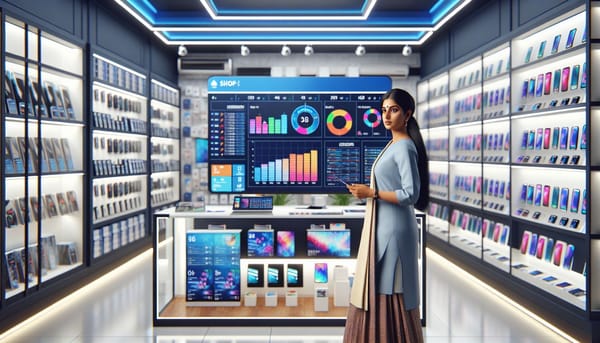
Omnichannel Analytics Dashboard: Store managers access comprehensive CLV reports showing customer value trends, segment performance, and predictive insights. The dashboard updates in real-time, providing current customer intelligence for better decision-making.
Indian Market Optimization: Commmerce understands Indian retail patterns, including festival seasons, regional preferences, and local payment methods like UPI and cash transactions. CLV calculations account for these market-specific factors.
The platform integrates with popular Indian payment gateways like Razorpay and PhonePe, ensuring all transaction types contribute to accurate CLV tracking. ROI improvements typically range from 25-40% as retailers optimize customer relationships based on CLV insights.
For retailers seeking comprehensive omnichannel customer data management, Commmerce provides the complete solution needed for sophisticated CLV tracking and customer relationship optimization.
Conclusion
Multi-store customer lifetime value tracking represents a critical capability for Indian retailers operating across multiple channels and locations. Traditional retail systems cannot provide the unified customer view needed for accurate CLV analytics, leading to missed opportunities and inefficient resource allocation.
Implementing a comprehensive omnichannel analytics platform enables retailers to unlock the full potential of their customer relationships. With proper multi-store customer lifetime value tracking, businesses can identify high-value customers, optimize marketing spend, and implement targeted retention strategies that significantly improve profitability.
The investment in advanced CLV tracking capabilities pays dividends through better customer understanding, improved retention rates, and more effective resource allocation across all channels and store locations. For retailers serious about maximizing customer relationships, unified omnichannel analytics becomes essential infrastructure for sustainable growth.
Ready to implement advanced customer lifetime value tracking across your retail operations? Schedule a Free Demo to see how a unified omnichannel platform can transform your customer analytics capabilities.
FAQs
Q: What is customer lifetime value in retail?
A: Customer lifetime value (CLV) is the total revenue a customer generates across all purchases during their relationship with your business, including all channels and store locations.
Q: How do you track CLV across multiple stores?
A: Track CLV across multiple stores by implementing a unified customer database that consolidates purchase history from all channels including physical stores, online store, and marketplaces into one platform.
Q: What metrics are needed for CLV calculation?
A: CLV calculation requires average order value, purchase frequency, customer lifespan, and gross margin data collected consistently across all store locations and channels.
Q: Can traditional POS systems track multi-store CLV?
A: Traditional POS systems like Vyapar and Marg ERP cannot track multi-store CLV effectively as they lack unified customer databases and omnichannel integration capabilities.
Q: How does omnichannel CLV tracking improve profitability?
A: Omnichannel CLV tracking improves profitability by identifying high-value customers, optimising marketing spend, personalising experiences, and focusing retention efforts on customers with highest lifetime value potential.
Disclaimer: This article is for general informational purposes only and does not constitute legal, financial, or tax advice. GST rules, compliance requirements, and platform features may change over time. Please verify the latest guidelines with a qualified professional or refer to official sources such as the GSTN or CBIC. Market statistics mentioned are based on publicly available estimates and may not reflect current figures. Commmerce product features referenced are accurate at the time of writing and subject to change.